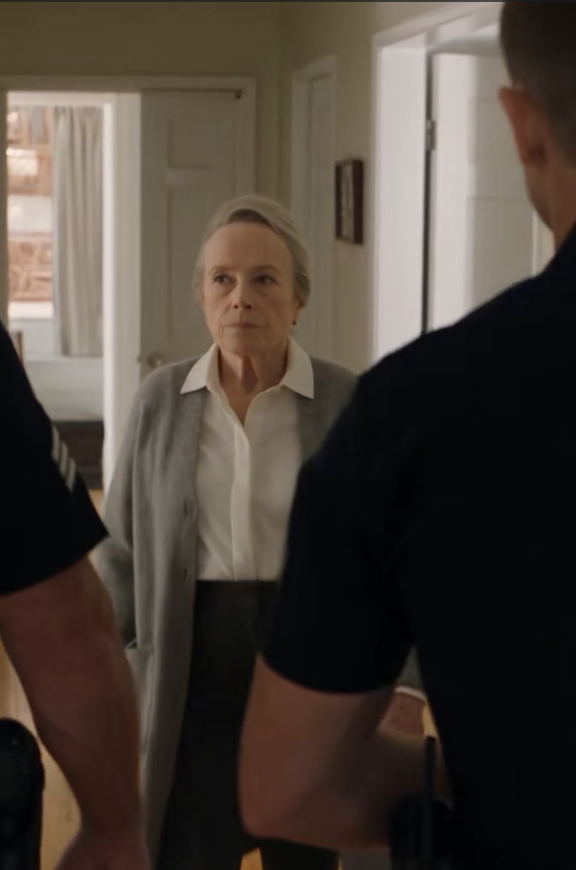
She stopped.
“Parker.”
“What about him?”
“He knew the entry was wrong.”
“He didn’t stop it.”
“No.”
“He entered with them.”
“Yes.”
“But?”
Eleanor looked down the hallway.
“But Danner looked at him every time the story began to break apart.”
Keene understood.
“You think Parker knows more.”
“I think he knows something he hasn’t decided whether to say.”
Keene nodded.
“We think so too.”
Parker made his decision thirty-six hours later.
He did not call the FBI.
He called Eleanor.
The number appeared at 10:42 p.m.
Unknown caller.
Eleanor nearly ignored it.
Then she answered.
“Hello?”
Silence.
“Who is this?”
“Mrs. Vale?”
She recognized the voice.
“Officer Parker.”
Another pause.
“I shouldn’t be calling.”
“No.”
“I need to tell you something.”
“Then you should call your lawyer.”
“My union lawyer told me not to talk to anyone.”
“That is usually what lawyers say when they hope clients will stop making their problems worse.”
“I didn’t know what Danner was doing.”
Eleanor sat at the kitchen table.
“Officer Parker—”
“He told us you’d agreed to let us look around.”
“I know.”
“Lyle believed him too.”
“You should stop.”
“He lied.”
“I heard Lyle say so.”
“No. Before that.”
Eleanor became still.
“What do you mean?”
Parker breathed out.
“He told dispatch we were going on administrative time. Then he had us leave our body cameras charging at the station.”
That mattered.
Eleanor said nothing.
“He said it was because we were meeting an informant and didn’t want the source recorded.”
“All three cameras?”
“Yes.”
“Did that seem normal?”
“No.”
“But you went.”
“Yes.”
His voice tightened.
“I went.”
Eleanor heard shame underneath it.
Not useful yet.
But real.
“What did he tell you in the car?”
“That we were going to retrieve stolen department property.”
“A laptop?”
“Yes.”
“From me?”
“He didn’t give your name until we were almost here.”
“And when he did?”
“I recognized it.”
“From where?”
Silence.
Eleanor waited.
Parker said, “The board.”
“What board?”
“At the station.”
“Which board?”
“The old case-review room. There are photographs pinned up. Officers, suspects, defense attorneys. Cases with complaints or litigation.”
Eleanor’s fingers tightened around the phone.
“Was my photograph there?”
“Yes.”
“For how long?”
“I don’t know.”
“Why?”
“I thought because you were a judge.”
“I’ve been retired seven years.”
“I know.”
Eleanor looked at the dark kitchen window.
“What did Danner say the laptop contained?”
“He said personnel records.”
“Did you believe him?”
“At first.”
“And later?”
“When you knew the law better than he expected.”
The answer was so honest Eleanor almost laughed.
Instead she said, “Why are you calling me?”
Parker’s breathing became audible.
“Because when the FBI separated us, Danner said if anyone asked, you invited us in.”
“That would be false.”
“I know.”
“He told you to lie.”
“Yes.”
“Did you?”
“Yesterday, yes.”
Eleanor closed her eyes.
“Then correct it.”
“I’m scared.”
“Of federal prosecution?”
“No.”
The answer came immediately.
Eleanor opened her eyes.
“Of Danner?”
Parker said nothing.
That was answer enough.
“Officer Parker, call Agent Keene.”
“I don’t have her number.”
“I’ll give it to you.”
“No.”
“Why not?”
“Because I don’t know who’s clean.”
“You called me.”
“You’re not police.”
Eleanor almost told him she was no longer a judge either.
Then she understood.
That was precisely why he had called.
“What do you know?” she asked.
Parker lowered his voice.
“There’s a storage room beneath the old evidence garage.”
Eleanor said nothing.
“He goes there after hours. Lyle knows. Other people know. Nobody asks.”
“What’s inside?”
“I don’t know.”
“Then this is speculation.”
“I saw him come out once carrying case files that were supposed to be archived.”
“That isn’t enough.”
“There’s more.”
Eleanor waited.
Parker whispered, “Yesterday, before we went to your house, he said if we found a blue flash drive, we were to give it directly to him.”
Eleanor’s pulse slowed.
Not quickened.
Slowed.
The way it had before difficult rulings.
“Blue?”
“Yes.”
“Did he say what was on it?”
“No.”
“Did he say where it came from?”
“No.”
“Did you tell the FBI?”
“No.”
“Then this conversation ends now. You call them.”
“I told you—”
“Listen carefully.”
Her voice had become the one attorneys remembered from her courtroom.
“You have already made one serious mistake by following an unlawful order and another by lying afterward. Fear does not improve with delay. It becomes leverage. Every minute you keep information from investigators gives Danner more power over you.”
Parker said nothing.
Eleanor continued.
“You need counsel who represents you, not your department. Then you need to tell the truth. All of it.”
“What if that destroys my career?”
“It may.”
He breathed sharply.
She did not soften it.
“But lying will destroy something larger.”
Silence.
Then Parker said, “Would you tell Keene I’m willing to meet?”
“Yes.”
“And that I want protection?”
“Yes.”
“Thank you.”
“Officer Parker.”
“Yes?”
“When you walk into that meeting, don’t tell them what makes you look better. Tell them what happened.”
He was quiet for several seconds.
Then:
“I understand.”
The line went dead.
Eleanor stared at the phone.
Blue flash drive.
She had never seen one.
At least she didn’t think she had.
Then she remembered Rebecca’s packet.
Not the documents.
The envelope.
Thick manila.
Three stapled affidavits.
A handwritten note.
And something else.
A plastic object she had assumed was a promotional keychain from the legal-aid office.
Blue.
Small.
Rectangular.
She had tossed it into the desk drawer.
Eleanor was on her feet before the thought fully formed.
She crossed the kitchen.
Opened the drawer.
Pens.
Tape.
Old stamps.
Two keys.
Paper clips.
No blue object.
She pulled the drawer farther out.
Nothing.
Then she remembered moving miscellaneous items into a ceramic bowl after cleaning the desk.
She opened the cabinet.
The bowl sat behind a stack of envelopes.
Inside were coins, a button, three paper clips, an old USB adapter—
—and a blue flash drive.
Eleanor stared at it.
Her phone was already in her hand when she heard something outside.
A car door.
She froze.
Another sound.
Footsteps on the side path.
Not the front walk.
The side.
She turned off the kitchen light.
Then she called Mara Keene.
Part IV — The Choice to Test the Truth
Keene answered on the second ring.
“Eleanor?”
“Someone is outside.”
Her voice changed instantly.
“Where?”
“Side of the house.”
“Are your doors locked?”
“Yes.”
“Move away from the windows.”
Eleanor held the blue drive between two fingers.
“There’s something else.”
“Later.”
“It can’t wait.”
A shadow moved beyond the kitchen curtain.
Eleanor stepped backward.
“The blue drive Danner was looking for is here.”
Silence.
Then Keene said, “Do not touch it again.”
“I’m holding it.”
“Put it down.”
“Where?”
“Anywhere. Counter. Table. Now.”
Eleanor placed it on the kitchen island.
A soft sound came from the rear door.
Metal against metal.
Someone testing the handle.
Keene said, “Agents are moving.”
“How far?”
“Close.”
“You stationed them again?”
“Yes.”
Eleanor almost objected.
Not now.
The rear doorknob moved.
Once.
Twice.
Then stopped.