Institutions used soft language when hard language threatened budgets, careers, or headlines.
I filtered the complaints by date.
Then by checkpoint.
Then by assigned personnel.
One name kept returning.
Dawson.
I watched six hours of footage from three different days.
Nothing obvious happened.
That did not surprise me.
People who misused authority rarely behaved badly all the time. If they did, they were easy to remove.
Dawson was different.
He knew where the lines were.
He knew where the cameras were.
He knew when supervisors were nearby.
He also knew which passengers were least likely to file something that survived review.
Older travelers.
People traveling alone.
People dressed casually.
People who looked confused.
People in a hurry.
People whose accents made them hesitate before challenging an officer.
He was not reckless.
He was selective.
That made him dangerous.
I watched him wave a businessman through after a credential failed to scan twice.
Twenty minutes later, he stopped a college-aged woman whose credential scanned correctly and questioned her for seven minutes about whether she “really belonged” in the expedited line.
I watched him laugh with a family wearing matching vacation shirts.
An hour later, he ordered an exhausted nurse to the back of another line because she sighed when he asked her to remove something she was not required to remove.
The incidents were small.
Small incidents were where habits lived.
I called Miriam Vale that afternoon.
She answered on the third ring.
“Vale.”
“This is Evelyn Hayes.”
A pause.
Then, “I was told you might call.”
“I’m reviewing your complaint files.”
Another pause.
“Then you know we’ve already looked into Dawson.”
“I know someone closed complaints.”
“That’s generally what happens after review.”
“Were they substantiated?”
“Not enough to justify discipline.”
“How many complainants were interviewed?”
Silence.
I looked at the spreadsheet.
“Miriam?”
“I’d have to check.”
“You signed eleven closures.”
Her voice cooled.
“You already have the documents. Why ask me questions you can answer yourself?”
Because documents were not people.
Because signatures lied less often when attached to voices.
Because defensiveness told me where to look next.
“I want to know what you remember.”
“I remember a difficult employee with a difficult temperament who has never crossed a line we could prove he crossed.”
“Those are different things.”
“I know.”
“Do you?”
That bought me three seconds of silence.
Then she said, “Come to the airport tomorrow.”
Vale’s office overlooked the terminal through a broad interior window.
From there, passengers became patterns.
Lines lengthened and shortened.
Officers rotated positions.
Families gathered themselves after screening.
Business travelers repacked laptops without looking up.
I had spent much of my career in rooms like that.
Rooms built for observation.
Vale stood beside the glass.
“He’s been here eleven years,” she said.
“Dawson?”
“Yes.”
“Complaints began four years ago.”
“Formal complaints began four years ago.”
I looked at her.
She kept watching the checkpoint.
“You knew about earlier concerns.”
“I knew people disliked him.”
“That isn’t the same thing.”
“No.”
“What was the same thing?”
She folded her arms.
“He was sharp with people. Impatient. Sometimes sarcastic. I spoke to him.”
“And?”
“He improved.”
“For how long?”
Her mouth tightened.
“You’ve already decided what you think.”
“I haven’t.”
“Yes, you have.”
I walked toward the window.
Below us, Dawson was not on duty.
The checkpoint moved smoothly without him.
“I think complaints are information,” I said. “Not verdicts.”
Vale said nothing.
“I think one complaint can be wrong. Ten can be complicated. Thirty-one means you stop asking whether people like someone and start asking what keeps happening.”
She turned toward me.
“We did.”
“Show me.”
That was the first moment she looked tired.
Not defensive.
Tired.
“There’s a problem with cases like this,” she said. “People want certainty.”
“So?”
“We review footage. We see an officer speaking to a passenger. No audio. We see a passenger become upset. We see Dawson gesture. Passenger walks away. Then we get a complaint saying he threatened arrest. Dawson says he explained consequences. What do I do with that?”
“You look for pattern.”
“We did.”
“And found thirty-one complaints.”
Her jaw shifted.
“You think I don’t understand how that sounds?”
“I think you understand exactly how it sounds.”
She moved away from the window.
“I have three hundred officers across rotating shifts. Vacancies. Overtime caps. Performance requirements. Every complaint becomes a process. Every process takes hours.”
There it was.
Not corruption.
Not conspiracy.
Something more common.
Pressure.
The administrative arithmetic by which one person’s bad conduct became another person’s inconvenience.
“How many hours has Dawson cost you already?” I asked.
Vale looked at me.
She knew what I meant.
Complaints.
Meetings.
Reviews.
Quiet warnings.
Reassignments.
Appeals.
The machinery of avoiding a decision.
“More than removing him might have,” she said.
It was the first honest thing she gave me.
“Then why is he still there?”
She looked back through the glass.
“Because every time we got close to something actionable, he behaved.”
That interested me.
“Meaning?”
“Whenever someone observed him directly, he was professional.”
“Scheduled observations?”
“Some.”
“Does he know the cameras?”
“Everyone does.”
“Body microphones?”
“Not standard at that position.”
I nodded.
Dawson did not need to be brilliant.
He only needed to understand the environment.
Vale looked at me.
“What are you proposing?”
I watched the line below.
A woman in sweatpants struggled to lift a suitcase onto a table. An officer helped her.
Good systems were full of people trying to do their jobs well.
That was why bad behavior could survive inside them.
Everyone wanted to believe the system was represented by the best people in it.
“I want him to decide who I am,” I said.
Vale frowned.
“What?”
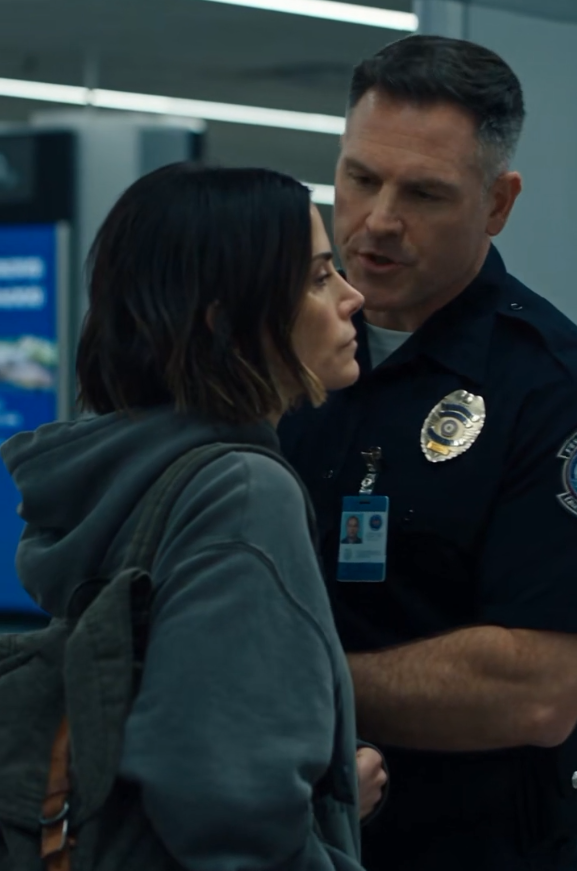
“I want to go through his checkpoint.”
“As an observer?”
“As a passenger.”
“No.”
“You haven’t heard the plan.”
“I don’t need to.”
“You said he changes behavior when watched.”
“Yes.”
“So he cannot know he’s being watched.”
Vale studied me.
“That creates risk.”
“Everything creates risk.”
“He could embarrass you.”
“That’s not risk.”
“He could remove you from the line.”
“That’s useful.”
“He could detain you.”
I looked at her.
“That would be more useful.”
She stared at me long enough that I could see her deciding whether I was reckless or simply unpleasant.
Probably both.
Finally she said, “If this happens, it happens by the book.”
“Agreed.”
“Valid travel documents.”
“Yes.”
“Valid screening status.”
“Yes.”
“No provocation.”
“I will ask him to do his job.”
“No hidden confrontation designed for a reaction.”
“I’m not interested in manufacturing behavior.”
Vale exhaled.
“And if nothing happens?”
“Then nothing happens.”
That part mattered.
An investigation was not a hunt for guilt.
If Dawson treated me professionally, I would report it.
If the pattern could not be substantiated, I would say so.
I had no interest in proving myself right.
I wanted to learn what was true.
Vale looked down at the checkpoint again.
“Why you?”
“Because I fit the pattern.”
She turned.
I gestured to myself.
“No visible status. Woman traveling alone. Casual clothes. Old backpack. No reason for him to imagine consequences.”
Vale’s expression changed slightly.