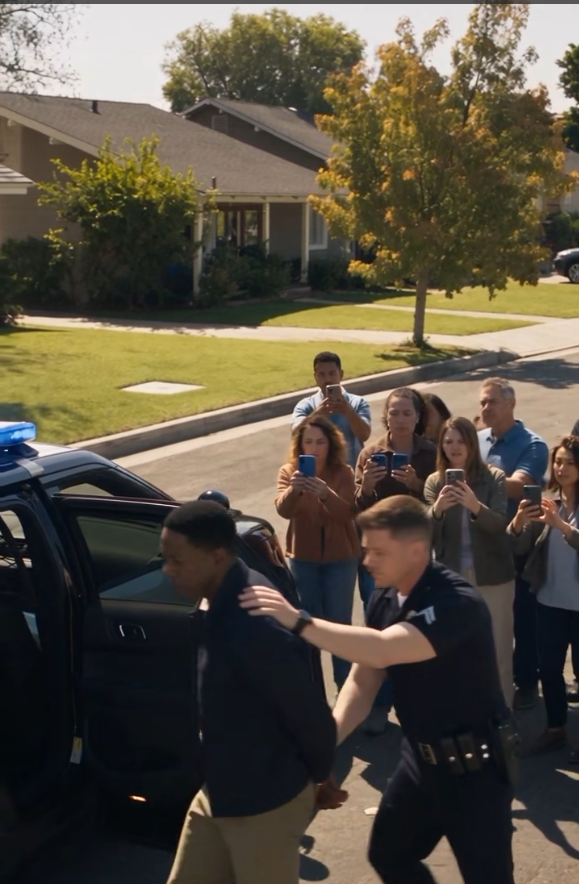
One examined Miller.
The other examined the reporting system that had allowed multiple documented concerns to remain invisible outside the department.
Marcus was recused from both.
When he received the formal notice, he read it in his office with the door closed.
He did not know what evidence had triggered the second review.
He only knew Kendra had signed the notice.
He found her in the break room twenty minutes later.
She was pouring coffee.
He held up the paper.
“I have no questions.”
“Good.”
“I do have an observation.”
“That sounds suspiciously like a question wearing a suit.”
Marcus placed the notice on the counter.
“We've opened a systemic review.”
Kendra added cream.
“So the paper says.”
“Which means whatever happened isn't limited to Miller.”
She stirred her coffee.
“Still not a question.”
Marcus studied her.
“You're impossible.”
“Yes.”
He started toward the door.
Kendra spoke before he reached it.
“Marcus.”
He turned.
Her expression had changed.
“You were right about one thing.”
“Only one?”
“The part of the story that matters most happened before anybody knew who you were.”
Marcus waited.
Kendra lifted the coffee.
“And the second-most-important part happened after.”
She walked past him.
Marcus remained in the break room, looking at the notice.
For the first time, he understood what she meant.
The detention would be judged on the facts that existed before Miller learned his identity.
The report would be judged on what Miller chose to write after he learned it.
One decision involved judgment.
The other involved truth.
Part IV — Reckoning
The certification hearing was scheduled for six weeks after the sidewalk detention.
Marcus hated the delay until Kendra reminded him that most civilians waited longer.
That ended the complaint.
Richmond completed its internal investigation first.
The department sustained findings for improper detention, failure to adequately articulate the legal basis for continued detention, discourtesy, and inaccurate reporting.
Miller was dismissed.
Marcus learned that from the newspaper.
He was sitting at his desk when the headline appeared on his computer screen.
He closed the browser without opening the article.
Fifteen minutes later, Kendra entered carrying an unrelated contract.
“You saw?”
“Yes.”
“Want to know more?”
“No.”
She stopped.
That answer surprised her.
Marcus leaned back.
“Dismissal is employment. Certification is ours.”
“Not yours.”
“You know what I mean.”
“I do.”
She placed the contract on his desk.
Marcus looked at her.
“Is Torres still employed?”
Kendra did not answer.
He nodded.
“Right. Recused.”
“Good reflex.”
He signed the contract.
At the board's hearing, Marcus would appear in only one capacity.
Witness.
He would not sit with staff.
He would not review exhibits in advance.
He would not enter through the private conference entrance used by board executives.
He would wait where every witness waited.
Kendra had insisted.
Marcus had agreed.
The morning of the hearing, he arrived twenty minutes early and sat on a wooden bench outside the administrative courtroom.
A state trooper waiting for another matter recognized him and started to stand.
Marcus shook his head.
The trooper remained seated.
A minute later, Sergeant Torres arrived.
Uniformed this time.
She stopped when she saw Marcus.
“Mr. Reed.”
“Sergeant.”
They had not spoken since she came to his house.
Torres sat at the opposite end of the bench.
For several minutes neither said anything.
Finally she asked, “You know if I'm testifying before or after you?”
“No.”
She glanced at him.
“You really don't?”
“I really don't.”
A faint smile touched her face.
“Must be driving you crazy.”
“It has improved my empathy for witnesses.”
That got a quiet laugh.
Then the expression left her face.
“I should've done more.”
Marcus looked toward her.
She kept her eyes forward.
“I don't know what you know.”
“You probably know enough.”
“I know what happened to me.”
Torres nodded.
“There were warnings.”
Marcus waited.
She rubbed her thumb along the edge of her notebook.
“I treated them like individual incidents. Each one small enough to solve locally.”
“And now?”
“Now I'm wondering whether ‘small enough’ is just what something looks like when you're not the person in handcuffs.”
Marcus looked toward the closed courtroom doors.
“That's a useful question.”
“It doesn't fix it.”
“No.”
Torres turned toward him.
“You're not going to tell me I did the best I could?”
Marcus met her eyes.
“No.”
For a moment, she seemed almost relieved.
He continued.
“But you're here.”
“So is Miller.”
“Yes.”
Torres looked down the hall.
“What do you think should happen to him?”
Marcus took his time.
“That's not my decision.”
“I asked what you think.”
“Same answer.”
“That's convenient.”
“No.”
Marcus rested his hands together.
“Convenient would be deciding that because I was the person in cuffs, I understand the entire case better than everyone who investigated it.”
Torres said nothing.
“I understand my part,” Marcus continued. “That's all.”
The hearing-room door opened.
A clerk called Torres's name.
She stood.
Before walking inside, she looked at Marcus.
“Two years ago, at that standards conference, you said supervisors teach officers what matters by what they tolerate.”
Marcus remembered.
“I said a lot of things that day.”
“I wrote that one down.”
She opened the door.
Marcus watched her enter.
An hour later, Torres sat under oath before a five-member panel.
Marcus was not present. Witnesses were sequestered.
Kendra stood at a lectern.
“Sergeant Torres, when you arrived at the scene, what did you observe?”
“Officer Miller had Mr. Reed in handcuffs beside the rear passenger door of his cruiser. Ms. Hayes was holding a Commonwealth certification-board credential. Several residents were recording.”
“What drew your attention first?”
“The credential.”
“Why?”
“I recognized it.”
“Did you recognize Mr. Reed?”
“After I saw the credential, yes.”
“What did you do?”
“I ordered Officer Miller to step away and remove the handcuffs.”
Kendra paused.
“Would you have ordered the handcuffs removed if the detained person had not been Marcus Reed?”
Torres did not answer immediately.
Miller sat beside his attorney at the other table.
The panel waited.
Torres finally said, “I hope so.”
Kendra's face remained neutral.
“That wasn't my question.”
“No.”
Torres swallowed.
“I don't know.”
The room became very still.
Kendra took one step closer.
“Why don't you know?”
“Because I recognized a pattern in what I saw.”
“What pattern?”
Torres glanced briefly toward Miller.
“Officer Miller had previously continued detentions after the original reason for the encounter had weakened. He had also reacted poorly when people questioned whether they were required to comply.”
“Had you documented those concerns?”
“Yes.”
“Were they reported to this board?”
“No.”
“Why not?”
“They were handled internally.”
“Successfully?”
Torres looked toward the panel.
“No.”
Kendra moved to a new exhibit.
A photograph of Torres's eight-month-old supervisory memorandum appeared on the screen.
“Read the highlighted sentence, please.”
Torres did.
“‘Officer Miller appears to interpret questions concerning lawful authority as personal challenges to his authority.’”
Kendra waited.
“Did you write that?”
“Yes.”
“Did you believe it when you wrote it?”
“Yes.”
“What corrective action followed?”
“Counseling. Limited remedial instruction.”
“Did you verify improvement?”
Torres's voice lowered.
“Not adequately.”
Miller's attorney rose.
“Objection. The witness is being asked to speculate about an extended performance period.”
The panel chair looked at Kendra.
“Rephrase.”
Kendra nodded.
“Sergeant Torres, after writing that memorandum, did you personally review additional body-camera footage specifically to determine whether the identified behavior continued?”