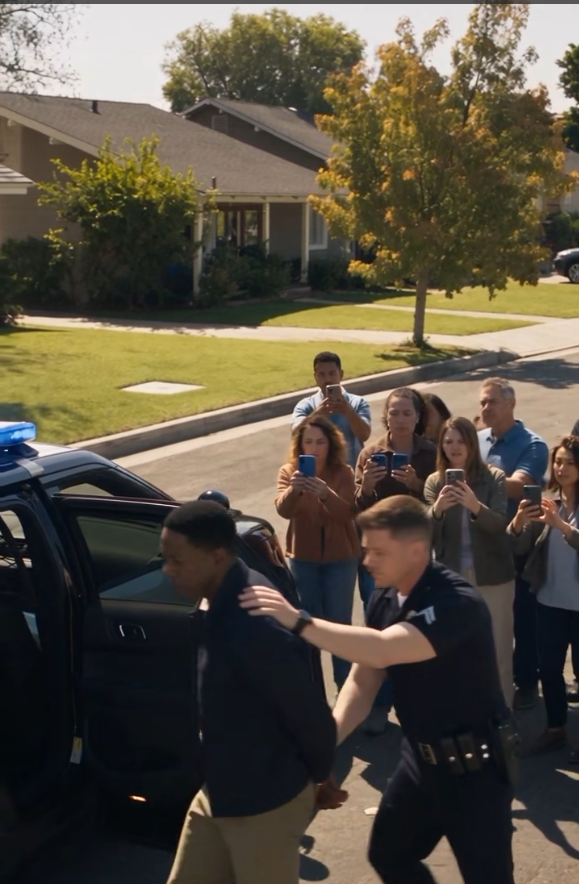
Richmond's department had not concealed Miller's earlier problems in the ordinary meaning of the word. No one had shredded reports. No one had altered dates. No one had ordered supervisors to keep the board uninformed.
The failure was more mundane.
The department's reporting rules classified most non-disciplinary counseling as a training matter. The Commonwealth required notification of misconduct that could affect certification, but the line between “performance deficiency” and “certification concern” was left partly to local interpretation.
Each of Miller's earlier incidents had been placed on the performance side.
Individually, each decision was defensible.
Together, they had created blindness.
The board's systemic review found similar patterns in multiple departments—not only Richmond.
That complicated everything.
Marcus remained recused because the issue had arisen through his own case.
For three months, he watched one of the most significant policy reviews of his tenure happen without him.
Kendra chaired staff support for the independent panel.
Torres testified twice.
Miller, surprisingly, agreed to testify once more.
Not to challenge the revocation.
To explain how the internal counseling had felt from his side.
“No one told me I was becoming dangerous,” he said.
The panel chair corrected him.
“Dangerous isn't our term.”
“I know.”
Miller looked down at his hands.
“They told me to slow down. They told me to explain more. They told me people have a right to ask questions. Every conversation felt like a small correction.”
“Did you believe those corrections were justified?”
“Sometimes.”
“And the other times?”
“I thought supervisors were being cautious.”
“What do you think now?”
Miller paused.
“I think every warning felt small because I was looking at them one at a time.”
Torres sat in the back of the room.
Their eyes met briefly.
Neither looked away.
The systemic panel eventually recommended a statewide change.
Repeated remedial interventions involving detention authority, search authority, force articulation, credibility, or citizen complaints would no longer remain invisible merely because each event fell below the threshold for formal discipline.
Patterns would trigger review.
Not automatic punishment.
Review.
The distinction mattered to Marcus.
When the proposal reached the full certification board for adoption, the board chair asked whether he intended to participate.
Marcus read the conflict opinion Kendra had prepared.
Legally, his recusal could end. The policy was statewide, prospective, and no longer concerned Miller specifically.
Ethically, the choice was less clear.
Kendra found him in the empty hearing room the evening before the vote.
Marcus stood at the witness table where Miller had testified.
“You can vote,” she said.
“I know.”
“You can also continue recusing.”
“I know.”
“You've spent three months complaining about watching your own agency work without you.”
“I complained twice.”
“You complained with remarkable efficiency.”
Marcus smiled faintly.
Kendra sat in the front row.
“What are you worried about?”
“That I want the policy too much.”
“Because it makes sense?”
“Because of what happened to me.”
“Both can be true.”
Marcus walked toward the panel bench.
“If I vote for it, critics will say I used my detention to rewrite statewide rules.”
“They'll say that anyway.”
“If I don't, I'm avoiding responsibility because I'm afraid of criticism.”
“They'll say that too.”
He looked at her.
“You're very helpful.”
“I charge by the hour.”
“You're salaried.”
“Then you're getting excellent value.”
Marcus sat on the edge of the staff table.
“What would you do?”
Kendra shook her head.
“No.”
“Why not?”
“Because this is finally your decision.”
Marcus looked around the empty room.
He remembered the sidewalk.
Miller's hand around his arm.
Kendra lifting the credential.
Torres recognizing him.
The cuffs opening.
That instant had bothered him from the beginning.
Not because being recognized had humiliated Miller.
Because recognition had protected Marcus.
He thought of Torres's answer under oath.
Would you have ordered the cuffs removed if the detained person had not been Marcus Reed?
I hope so.
Then:
I don't know.
Marcus looked at Kendra.
“I'll participate.”
She nodded.
“Why?”
“Because recusal is supposed to protect a process, not protect me from owning a decision.”
The next morning, Marcus took his seat.
The policy debate lasted two hours.
Several board members worried about drowning the agency in minor reports.
Others warned against turning supervision into punishment.
Marcus listened.
When his turn came, he did not mention Miller.
He did not mention the sidewalk.
He said, “A pattern review is not discipline. It is a question. Our current system sometimes waits until a local agency has decided the answer before allowing the state to see the question.”
One member asked, “And you think that justifies tracking remedial interventions statewide?”
“For specific categories tied to public authority, yes.”
“What about the chilling effect on supervisors? If every coaching session becomes a state record, officers may be punished for asking for help.”
Marcus nodded.
“Then don't record every coaching session. Record repeated interventions involving the same authority concern. And prohibit the board from treating the existence of coaching itself as misconduct.”
The member considered that.
Marcus continued.
“We should want early correction to work. But we can't evaluate whether it works if repeated correction disappears into separate local files.”
The final vote was seven to two.
The policy passed.
Marcus voted yes.
Part VI — Aftermath
Four months after the detention, Marcus returned to the block where it happened.
No cameras waited for him.
No reporters.
No cruisers.
It was an ordinary Saturday afternoon.
The two teenagers were playing basketball again.
One of them recognized Marcus and stopped dribbling.
“Hey.”
Marcus lifted a hand.
The boy jogged toward him.
“You remember me?”
“You were holding the phone sideways.”
The teenager grinned.
“My brother told me vertical would've gotten more views.”
“Your brother is probably right.”
The other boy approached carrying the ball.
“You really took that cop's badge?”
Marcus shook his head.
“No.”
“But he lost it.”
“His certification was revoked.”
“Same thing.”
“Not exactly.”
The boy bounced the ball once.
“Did you vote?”
“No.”
“You could've?”
“No.”
The first teenager frowned.
“I thought you ran the board.”
“I work for the board.”
“That's not what the videos say.”
Marcus smiled.
“Videos say a lot of things.”
The elderly neighbor opened her screen door.
“Marcus!”
He walked toward her porch.
She held a watering can in one hand.
“You finally came back.”
“I've been busy.”
“I noticed.”
She set down the can.
“You want lemonade?”
“No, thank you.”
“You always say no.”
“Then why do you keep asking?”
“Because one day you'll learn manners.”
Marcus laughed.
She looked toward the curb where the cruiser had been parked.
“I felt terrible.”
“For what?”
“I was the one who told the dispatcher there'd been somebody around cars.”
Marcus became still.
He had never known that.
She saw his expression.
“Not you.”
“I assumed not.”
“There was a man checking door handles half an hour earlier. Gray sweatshirt. Young. I called the non-emergency number.”
Marcus listened.
“When the officer came, I was inside on the phone with my sister. By the time I walked out, you were already cuffed.”
“You gave a description?”
“Of course I did.”
Marcus looked down the street.
He was wearing a light blue shirt that evening.
No sweatshirt.
Not young.
The investigative file had probably contained the dispatch recording.