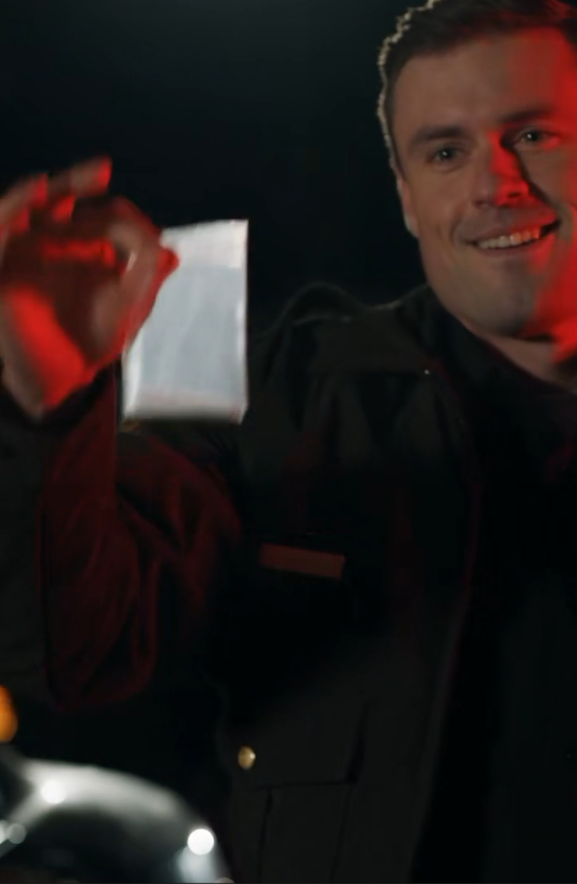
But perhaps not every suspicious record bearing Keller’s name belonged to Keller alone.
Claire returned to the interview room observation glass.
Keller was waiting.
The investigator had paused questioning at Claire’s request.
Claire said, “Bring me in.”
The investigator looked at her.
“You sure?”
“Yes.”
“You’re part of the incident.”
“I know.”
“Then this needs boundaries.”
“Set them.”
Five minutes later, Claire sat across from Keller.
His attorney sat beside him.
The independent investigator remained at the end of the table.
Keller looked tired now.
Claire placed no file in front of her.
He said, “Found it?”
Claire ignored the provocation.
“Who gave you my photograph?”
His attorney said, “He’s not answering—”
Keller interrupted.
“You still don’t understand.”
Claire looked at him.
“Then help me.”
He smiled faintly.
“You think I’m going to confess because you use the soft voice?”
“No.”
“Good.”
“I think you wanted page 47 seen.”
The smile disappeared.
Claire continued.
“You knew it would complicate the case.”
No answer.
“You knew some of the electronic records attributed to you weren’t created from your terminal.”
Keller looked down.
“Somebody used another unit.”
Silence.
Claire leaned back.
“You were covering for someone.”
His attorney touched Keller’s sleeve.
Keller pulled his arm away.
Claire said, “Or they were covering for you.”
That got a reaction.
Small but useful.
Keller looked at her quickly.
Claire continued.
“Which is it?”
“You want the whole department in handcuffs.”
“No.”
“That’s what people like you always want.”
“What do people like me want?”
“A clean story.”
Claire almost smiled.
“You planted evidence in front of a running body camera.”
He leaned forward.
“I didn’t know it was running.”
The words entered the room and stayed there.
His attorney shut his eyes.
Keller realized what he had said.
Too late.
Claire did not move.
Neither did the investigator.
The admission was not complete.
But it was enough to change the air.
Claire spoke quietly.
“So you would have done something different if you knew.”
Keller stared at her.
His attorney said, “Interview over.”
Keller raised a hand.
“No.”
“Stop talking.”
“No.”
He looked at Claire.
“You want the truth? You have no idea what these streets are like when your reports become rules.”
Claire said nothing.
“People walk because someone forgot a camera. Evidence gets tossed because a form has the wrong time. Everybody knows what happened, but your people come in afterward and act like paperwork is more real than what we saw.”
“So you fix it.”
Keller’s expression hardened.
“We make cases survive.”
“By creating evidence?”
“By not letting technical garbage protect people who shouldn’t be protected.”
Claire watched him.
There was the center of it.
Not greed.
Not thrill.
Not even hatred in the simple sense.
Permission.
He had given himself permission.
Once.
Then again.
Then enough times that the line stopped looking like a line.
Claire said, “Who else?”
Keller laughed softly.
“You think I’m giving you names?”
“You wanted me to see page 47.”
“I wanted you to know your case is wrong.”
“Not all of it.”
He looked away.
Claire said, “Somebody else is in those records.”
No answer.
“You tried to frame me because you thought destroying my credibility would destroy the review.”
Keller’s face tightened.
“You were coming after everyone.”
“I was coming after evidence.”
“Same thing.”
“No.”
She held his gaze.
“That’s the lie you needed.”
Keller looked toward the mirror.
Then back.
“I didn’t start it.”
His attorney whispered, “Stop.”
Keller’s mouth twisted.
“You think that helps me?”
Claire did not answer.
He laughed once.
Dry.
“No. Of course not.”
He looked down at his hands.
“When you’re new, you see something wrong, you tell yourself it’s one guy. Then you find out the sergeant knows. Then the lieutenant knows the sergeant knows. Then reports come back changed. Complaints vanish. Guys who play along get good assignments.”
Claire listened.
No interruption.
No encouragement.
Keller continued.
“Then one night somebody tells you to leave your camera off because a search needs to happen. You do it. Nothing happens. Nobody gets hurt. They find what they expected to find.”
His attorney said his name.
Keller ignored him.
“Next time it’s easier.”
Claire said, “And eventually you bring your own evidence.”
Keller looked at her.
His face carried no shame Claire could use.
Only exhaustion.
“Eventually you stop caring where the evidence came from.”
The investigator spoke.
“Who taught you?”
Keller shook his head.
“No.”
Claire said, “Then page 47 means nothing.”
Keller looked at her sharply.
“You know it does.”
“It means records overlap.”
“It means your case stops at the wrong person.”
Claire felt the harder choice arrive.
She could push.
Press Keller for names now.
Offer cooperation.
Promise consideration she did not have authority to promise.
Trade on his fear.
Investigators did versions of that every day.
Or she could preserve the case properly and accept that the larger truth might take longer.
Six months had already taught her the cost of shortcuts.
Keller had just explained the cost better than anyone.
Claire closed her notebook.
His expression changed.
“That’s it?”
“Yes.”
“You don’t want the name?”
“I want evidence.”
“I can give you the name.”
“Then give it formally.”
His attorney stared at him.
Keller said, “You’ll lose the window.”
“Maybe.”
“They’ll clean everything.”
“Maybe.”
“You know I’m right.”
Claire stood.
Keller’s voice sharpened.
“You’re walking away?”
She looked down at him.
“No.”
She thought of the people whose complaints had been dismissed because someone decided the ends mattered more than the method.
She thought of Keller standing beneath the streetlight with the plastic bag.
She thought of herself, minutes earlier, tempted to do the same thing in reverse—to seize his fear and convert it into whatever truth she needed.
“I’m refusing to build this case the way you built yours.”
Keller stared at her.
Claire turned to the investigator.
“Record his offer. Arrange counsel. If he wants to cooperate, do it under formal agreement with independent corroboration.”
Then she left the room.
It felt, for several steps, like abandoning the fastest path to the truth.
Then Claire remembered that fast paths were how they had arrived here.
The breakthrough came not from Keller’s confession but from the preserved records.
Once investigators stopped treating the overlapping unit credentials as noise, the pattern sharpened.
Login times.
Vehicle assignments.
Camera failures.
Property transfers.
Keller had been central.
But not alone.
The second officer’s testimony opened another sequence of questions.
The supervisor’s records opened more.
No miracle document appeared.
No secret recording solved everything.
Instead the case widened because the evidence had finally been arranged in the correct order.
Keller eventually gave a formal statement with counsel present.
Claire was not in the room for most of it.
That was deliberate.
She had become part of the evidence.
Her roadside stop would now be examined like every other complaint.
Her memory would be tested.
Her decisions reviewed.
Her language parsed.
That was how it should be.
By late afternoon, Keller was formally suspended and placed under investigation for evidence fabrication, false reporting and related misconduct.