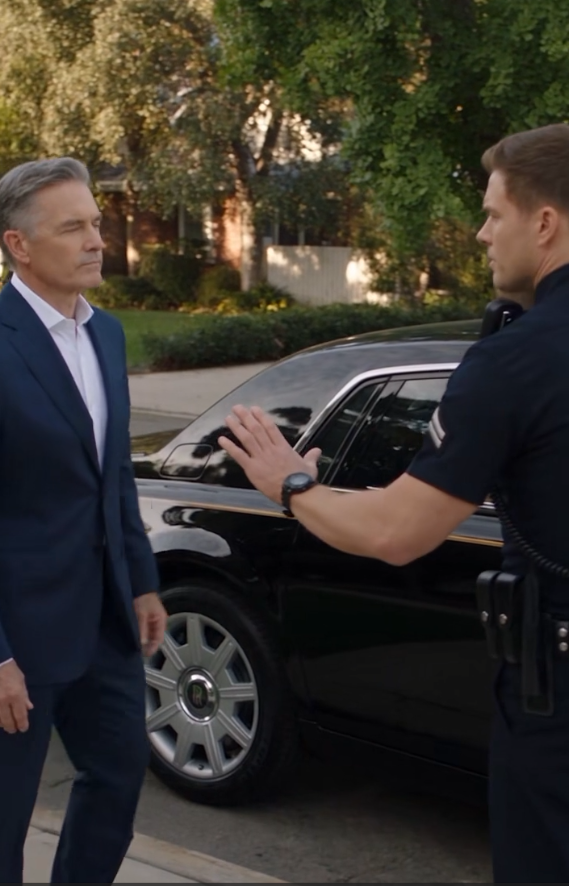
Terrence waited.
“There were twenty-seven.”
“How many raised concerns?”
“Seven.”
Terrence’s expression did not change.
Miller continued.
“Three were probably fine. Two were poor judgment but not policy violations. Two…” He stopped.
“Two what?”
“Looked too much like yours.”
“Were there arrests?”
“One citation. One detention, no charges.”
“Complaints?”
“No.”
Terrence looked toward the window.
Miller said, “I missed them.”
“You were not present.”
“I supervised him.”
“That is different.”
“Not different enough.”
Terrence turned back.
“What are you planning to do?”
Miller seemed surprised.
“Me?”
“Yes.”
“I’ve already submitted a supervisory review.”
“That’s paperwork.”
Miller almost smiled.
“You really are a judge.”
“So I’ve been told.”
Miller looked down.
“I requested retraining for the shift.”
“Mandatory?”
“Yes.”
“On what?”
“Investigative stops. Articulation. De-escalation. Report accuracy.”
Terrence nodded.
“What else?”
Miller’s eyes lifted.
“You think that isn’t enough.”
“I asked what else.”
Miller leaned back.
“I’m reopening the closed complaint I supervised.”
“Can you?”
“I can request review.”
“Then do it.”
“I already did.”
Terrence nodded again.
Miller looked at him carefully.
“You know what’s strange?”
“What?”
“If that Marshal Service call hadn’t come, none of this happens.”
Terrence sat quietly.
Miller continued.
“You might have spent the night there.”
“No.”
Miller frowned.
“Why not?”
“Monica would have dismantled the building brick by brick before midnight.”
Miller laughed despite himself.
It was the first moment of ease between them.
Then Terrence’s expression returned to seriousness.
“But your point stands.”
Miller nodded.
“I keep thinking about the phone.”
“So do I.”
“When it rang, I thought the problem was that we had arrested a federal judge.”
“And now?”
Miller looked at him.
“The problem was that I needed the phone call to realize there was a problem.”
Terrence said nothing.
Miller stood.
At the door, he paused.
“Judge?”
“Yes?”
“I know an apology doesn’t fix anything.”
“No.”
“But I am sorry.”
Terrence looked at him.
“I believe you.”
Miller nodded.
Then left.
Terrence remained behind his desk long after the door closed.
That night, he told Monica he wanted to do something unusual.
She listened.
Then said, “Absolutely not.”
Terrence raised an eyebrow.
“You haven’t even heard the whole idea.”
“I heard enough.”
“I want to speak to Callaway.”
“No.”
“Monica.”
“No.”
“He asked me why.”
“And you answered.”
“Not fully.”
“You owe him nothing.”
“I know.”
“Then why?”
Terrence was quiet.
Because that was the part he had not yet fully understood himself.
Finally he said, “Because the institutional process can decide whether he keeps his job. It cannot tell me whether he understands what happened.”
Monica stared at him.
“And if he doesn’t?”
“Then I’ll know.”
“That helps you?”
“Maybe.”
She looked toward the kitchen.
Then back at him.
“You are not meeting him alone.”
“He may refuse if counsel is present.”
“I meant me.”
Terrence smiled faintly.
“I assumed.”
She did not smile back.
“I’m serious.”
“So am I.”
In the end, Callaway agreed.
Part IX — The Final Confrontation
They met in a mediation room inside a neutral government building.
No uniforms.
No cameras.
No press.
Callaway arrived wearing a plain blue shirt and dark trousers.
Terrence almost did not recognize him without the equipment belt, badge, body camera, radio, and vest.
Authority altered silhouette.
So did its absence.
Monica sat beside Terrence.
Callaway came with his attorney, who remained near the wall.
The attorney opened with conditions.
“This is not an admission interview. Nothing said here may be represented as a waiver of Mr. Callaway’s pending appeal rights.”
Terrence nodded.
“I’m not here about the appeal.”
Callaway looked at him.
“Then why are you here?”
Terrence said, “Because you asked me a question.”
Callaway leaned back.
“Which one?”
“Why I didn’t ask them to fire you.”
Callaway’s mouth tightened.
“I remember.”
Terrence folded his hands on the table.
“I gave you the legal answer.”
Callaway glanced at Monica.
Then back.
“What’s the other one?”
Terrence looked at him.
“Because I wanted your consequence to come from what you did, not from what I am.”
Callaway gave a short, bitter laugh.
“Easy for you to say.”
Monica shifted slightly.
Terrence stayed still.
“Why?”
“You walk into a room and people stand up.”
“Sometimes.”
“You make one phone call and careers end.”
“I made no phone call.”
Callaway’s eyes hardened.
“Your people did.”
“My clerk followed a security protocol because I missed a scheduled call.”
“Same difference.”
“No.”
“It is from where I’m sitting.”
Terrence considered him.
“Then tell me where you’re sitting.”
Callaway looked toward his attorney.
The attorney said nothing.
Callaway’s voice changed.
“I’m sitting unemployed after fifteen years because one stop went bad.”
Monica spoke for the first time.
“One stop?”
Callaway looked at her.
She held his gaze.
“Your termination cited prior incidents.”
“Because they dug them up after this.”
“They existed before this.”
“They weren’t sustained.”
“Some weren’t reviewed fully.”
Callaway’s jaw tightened.
Terrence raised one hand slightly.
Monica stopped.
He looked at Callaway.
“What did you think when you saw me beside the car?”
Callaway frowned.
“What?”
“The first moment.”
“I got a call.”
“That isn’t what I asked.”
Callaway shifted.
“Suspicious vehicle.”
“No. A vehicle is an object. You looked at me before you spoke. What did you think?”
Callaway stared at him.
Terrence waited.
Minutes in a courtroom had taught him that the urge to rescue silence was often where truth went to die.
So he let the silence remain.
Callaway finally said, “I thought you didn’t belong there.”
Monica went still.
Terrence asked, “Why?”
Callaway’s face changed.
“I don’t know.”
“That’s not true.”
The attorney leaned forward.
“Judge—”
Callaway raised a hand.
“No. Let him ask.”
He looked at Terrence.
“You were standing around looking at houses.”
“I had just gotten out of my car.”
“That’s what the caller said.”
“The caller said I had looked toward two houses.”
“You matched it.”
“I was the only man near a dark sedan.”
“Yes.”
“That is not the same as suspicion of a crime.”
Callaway’s voice sharpened.
“I didn’t know that.”
“You could have asked.”
“I did.”
“You demanded.”
Callaway looked away.
Terrence continued.
“You asked what I was doing. I answered. You demanded identification. I asked why. From that moment forward, every question I asked seemed to increase your certainty that I was a problem.”
Callaway rubbed a hand across his face.
“You were challenging me.”
“Yes.”
“Exactly.”
Terrence leaned forward slightly.
“Why was that a threat?”
Callaway did not answer.
Terrence’s voice remained calm.
“You had the badge. You had the radio. You had the body camera. You had the car. You had the authority to detain me under lawful circumstances. Why did a question make you feel less in control?”
Callaway’s attorney shifted again.
Callaway looked at the table.
When he spoke, his voice was lower.
“Because people test you.”
Terrence waited.
“Every day,” Callaway continued. “They lie. They argue. They run. They tell you they know the mayor, the chief, a lawyer, somebody. If you hesitate, they take advantage.”
Terrence said, “So you learned not to hesitate.”