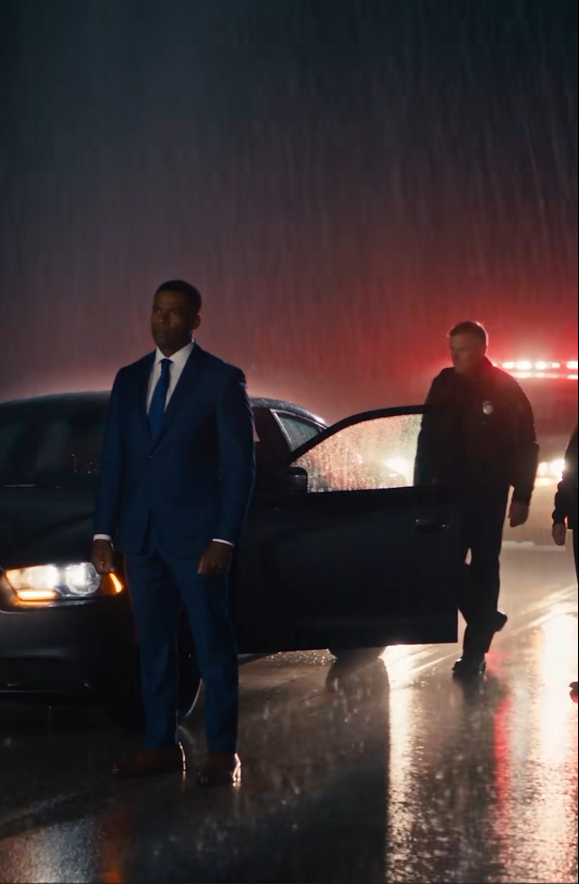
“‘I assisted Officer Ryker with a traffic stop involving David Caldwell. I maintained position near the rear of the suspect vehicle while Officer Ryker conducted a probable-cause search based on suspected marijuana odor. Officer Ryker recovered a clear plastic bag containing suspected cocaine from beneath the driver’s seat. Suspect was taken into custody without incident.’”
David read it twice.
“What isn’t there?”
Sarah nodded.
“Exactly.”
No statement that she saw the cocaine beneath the seat.
No statement that she observed the discovery itself.
No corroboration of marijuana odor.
Careful language.
David handed the page back.
“She’s scared.”
“Or smart.”
“Those aren’t mutually exclusive.”
Sarah put the report away.
“Ryker’s footage?”
“Requested.”
“Dash?”
“Requested.”
“Bennett?”
“Requested.”
“Dispatch?”
Sarah looked at him.
“That one got interesting.”
David stopped drinking.
“How?”
“County counsel called me at six forty.”
“Why?”
“To tell me they received an overnight evidentiary-retention notice originating from communications.”
David said nothing.
Sarah continued.
“They wouldn’t describe the contents. They did say a dispatch employee preserved material related to your arrest outside the standard police evidence system.”
David stared at her.
“Who?”
“They didn’t say.”
“Video?”
“They didn’t say.”
“But something was preserved.”
“Yes.”
He looked away.
Across the garage, a security guard pretended not to watch them.
David lowered his voice.
“Ryker positioned himself to block his own camera.”
Sarah’s expression changed.
“His own.”
“Bennett was behind him.”
Now she understood.
“Her angle.”
“Maybe.”
“Did you see where she was standing?”
“Yes.”
“And her camera?”
“Yes.”
Sarah took out her phone.
“What are you doing?”
“Adding a specific demand that Bennett’s original cloud upload be frozen immediately, not merely the department copy.”
David nodded.
“Also dispatch streaming logs.”
“Already writing it.”
“And vehicle activation records.”
“David.”
He stopped.
Sarah finished typing.
“Let me be your lawyer.”
A humorless smile touched his face.
“I’m not good at that.”
“I noticed.”
She put away the phone.
“You’re going home. You’re changing clothes. You’re not calling witnesses, investigators, dispatchers, Bennett, the DA, or God.”
“I don’t have God’s number.”
“You’d subpoena it.”
David looked at her.
Sarah’s voice softened.
“This is different.”
He knew what she meant.
He had spent years controlling evidence.
Now he was evidence.
A defendant.
A headline.
A man whose ordinary movements would be replayed and interpreted by strangers.
He looked at the coffee in his hand.
“Twenty-four hours ago, I was preparing indictments against his unit.”
“And now you’re my client.”
“I hate that sentence.”
“You’re going to hate several more before this is over.”
He looked toward her.
Sarah stepped closer.
“But listen carefully. We do not need to prove who David Caldwell is.”
“No?”
“No. We need to prove what Thomas Ryker did.”
That distinction settled him.
Evidence.
Not reputation.
Facts.
Not outrage.
David nodded once.
“Okay.”
Sarah handed him her car keys.
“What?”
“You’re not driving your sedan.”
“It’s impounded.”
“Exactly.”
Thomas Ryker spent the morning being congratulated.
Quietly.
Nobody was stupid enough to slap him on the back in front of command.
But inside the Seventh Precinct, men found reasons to stop by.
“Hell of a stop.”
“Never know who people really are.”
“Caldwell. Can you believe it?”
Ryker accepted every comment with the modest expression of a man pretending he wished things had turned out differently.
By noon, the union president had called.
By two, a television producer had requested an interview.
Ryker declined.
That made him look disciplined.
He knew how stories worked.
For years, he had watched prosecutors stand behind podiums before trials and pretend they were merely informing the public.
Now the story belonged to him.
David Caldwell, crusading prosecutor, caught with enough cocaine for distribution.
The irony was so perfect that Ryker suspected people would repeat it because they wanted it to be true.
He was completing paperwork when Chloe Bennett appeared at his desk.
She didn’t sit.
Ryker kept typing.
“What?”
“My camera.”
His fingers stopped for half a second.
“What about it?”
“Evidence tech asked whether I docked it.”
“You did.”
“Yes.”
“So?”
She looked around.
Other officers were nearby.
Ryker stood.
“Come on.”
He led her into the equipment corridor.
The door closed behind them.
“What’s the problem?”
Bennett lowered her voice.
“I want to correct my report.”
Ryker’s expression remained neutral.
“What needs correcting?”
“I didn’t see where the bag came from.”
“You wrote that.”
“No. I wrote that you recovered it from beneath the seat.”
“That’s what happened.”
“I didn’t see it beneath the seat.”
Ryker stared at her.
“You were standing six feet away.”
“Exactly.”
“What are you suggesting?”
“I’m not suggesting anything.”
“Then stop acting like you are.”
Bennett’s jaw tightened.
Ryker stepped closer.
“You’re new, so I’m going to help you.”
“I didn’t ask—”
“Yes, you did. The minute you came to me with this.”
He kept his voice quiet.
“You don’t write reports about what you imagine. You write what occurred. I searched the vehicle. I found narcotics beneath the seat. You witnessed the recovery.”
“I witnessed the bag in your hand.”
“Same event.”
“No.”
Ryker’s face changed.
Only slightly.
Bennett noticed.
“That prosecutor has been coming after cops for more than a year,” he said. “You know that?”
“I know.”
“He has destroyed careers.”
“If they committed crimes—”
“You weren’t there.”
Bennett held his gaze.
“Neither were you in those cases.”
A long pause.
Ryker gave a short laugh.
“You want to survive in this job?”
She didn’t answer.
“Learn something. People will use your uncertainty against you. Defense lawyers. Prosecutors. Command. Everybody. You start writing reports that make you sound confused, and nobody trusts you.”
“I’m not confused.”
“No?”
“No.”
Ryker stepped back.
“Then don’t correct anything.”
Bennett left without answering.
Ryker waited until the door closed.
Then he took out his phone.
He called evidence control.
“Ryker. Traffic arrest from last night. I need to confirm whether all camera uploads completed.”
He listened.
“Both?”
Another pause.
His eyes narrowed.
“What do you mean the Bennett file has a retention hold?”
Part III — The Second Camera
Brenda Hayes received the first warning at 3:17 that afternoon.
Her supervisor called her into the office.
“Did you flag material from a traffic stop last night?”
“Yes.”
“Why?”
“Because I believed it contained evidence of misconduct.”
Her supervisor looked exhausted already.
“You copied it to legal retention.”
“Yes.”
“You also created an integrity archive.”
“Yes.”
“And a secondary emergency-services copy.”
“Yes.”
“Brenda.”
“I know what I did.”
“You bypassed procedure.”
“No. I used the retention procedure.”
“For officer-involved emergencies.”
“For evidence at risk of loss.”
Her supervisor leaned back.
“Was it at risk?”
Brenda met his eyes.
“An officer appeared on video to plant drugs in a vehicle belonging to a prosecutor investigating his unit.”
The words changed the room.
Her supervisor lowered his voice.
“Appeared?”
“That is what I saw.”
“You understand how serious that accusation is.”
“Yes.”
“Did anyone instruct you to preserve it?”
“No.”
“You called county counsel.”
“The duty attorney.”
“Before notifying police command.”
“Yes.”
“Why?”
“Because police command includes people from the same department as the officer on the recording.”