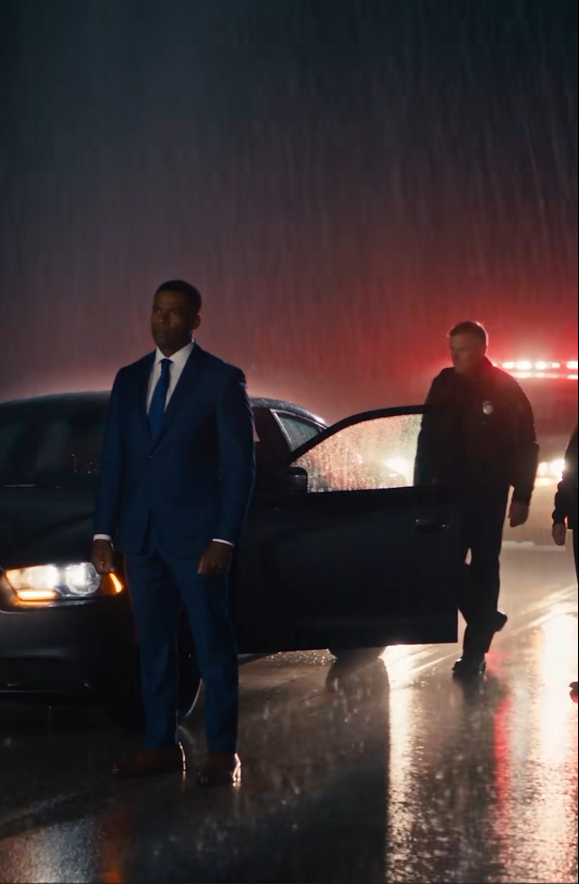
“That doesn’t mean—”
“No,” Brenda said. “It doesn’t. But it means preserving first was reasonable.”
Her supervisor looked toward the blinds.
“You’re being placed off the primary console until this is reviewed.”
Brenda nodded.
“I assumed.”
“You may face discipline.”
“I assumed that too.”
He looked at her for several seconds.
“You could have sent the clip to Internal Affairs.”
“And if the file disappeared before they opened it?”
“You think that would happen?”
Brenda’s expression didn’t change.
“I think the reason evidence systems have redundancy is because human beings are not always reliable.”
He sighed.
“You’ve always been difficult.”
“I’ve always been careful.”
She stood.
At the door, he spoke again.
“Was it clear?”
Brenda turned.
He wasn’t asking as her supervisor now.
He was asking as a man.
She answered the same way.
“Yes.”
Sarah received the video that evening under a temporary protective order.
She watched it alone first.
Then she called David.
“Come to my office.”
“What happened?”
“Come here.”
He arrived twenty-five minutes later.
Sarah’s laptop sat closed between them.
David took the chair across from her.
“You have it.”
“Yes.”
“Bennett?”
“Yes.”
“Show me.”
Sarah didn’t open the laptop.
“I need you to understand something.”
David’s expression sharpened.
“Sarah.”
“This is good evidence.”
“How good?”
“Good enough that I want you to watch once, then stop.”
He leaned back.
“Why?”
“Because you’re going to want to watch it twenty times. You’ll start analyzing every pixel. You’ll get angry at things you already survived. That won’t help.”
David looked at the laptop.
“Play it.”
Sarah opened the file.
The angle began behind the patrol car.
Rain blurred the frame.
Audio crackled.
David heard his own voice from the road.
I do not consent to any search.
Seeing himself felt stranger than he expected.
On screen, he stood beside the trunk in his soaked suit.
Ryker moved toward the driver’s door.
The camera followed unintentionally as Bennett adjusted her position.
Ryker searched.
Console.
Floor.
Door.
Then his right hand moved toward the opening of his vest.
The movement was small.
Practiced.
For two frames, the plastic bag was visible against the dark uniform fabric.
Then his hand disappeared into the vehicle.
Three seconds later it emerged from beneath the driver’s seat.
Holding the same bag.
Sarah paused the video.
David stared.
She advanced frame by frame.
Bag at vest.
Hand downward.
Empty space under seat.
Hand returns.
Bag.
Sarah said nothing.
Neither did David.
After a while, he asked, “Audio?”
She continued.
Ryker’s voice:
Looks like cocaine.
Then David’s:
That did not come from my car.
Sarah skipped forward.
After David was placed inside the patrol vehicle, Bennett’s camera captured Ryker beside her.
Sir—
One look from him.
Then later:
I didn’t see it there before.
You weren’t searching.
I know, but—
You were controlling the suspect.
He’s a prosecutor.
He’s a suspect.
Write what happened.
Sarah stopped the file.
David sat motionless.
He expected satisfaction.
Vindication.
Instead he saw the back seat of the patrol car in his mind.
The metal partition.
Water running down the window.
His wrists behind him.
Ryker outside, already constructing the story that would become David’s life by sunrise.
Sarah closed the laptop.
“There’s more.”
David looked up.
“Dispatch metadata confirms the stream was received live.”
“Meaning?”
“Meaning Ryker cannot plausibly argue the clip was altered after upload. The file existed in real time at communications.”
“Witnesses?”
“Three.”
David exhaled.
“And Brenda Hayes preserved it before the arrest paperwork was complete.”
“Why?”
“Because she saw what happened.”
David rubbed his thumb along the edge of the chair.
“Has the prosecutor assigned to my case seen this?”
“The special prosecutor has.”
“What did they say?”
“They requested forty-eight hours before taking a position.”
David gave her a flat look.
Sarah shrugged.
“Institutions move slowly when moving quickly would require admitting something terrible.”
“What about Ryker?”
“His attorney knows a second video exists. I don’t know whether they’ve received it.”
David stood and walked toward the window.
Outside, Monroe County’s courthouse dome rose over the street.
“So they’ll dismiss.”
“Probably.”
“Probably?”
“They should.”
“That isn’t enough.”
Sarah watched him.
He turned.
“If they dismiss the charges quietly and send this to Internal Affairs, the story becomes ‘conflicting video led to withdrawal.’ Ryker retires while they investigate. Bennett gets pressured. Brenda gets disciplined for procedure. Six months from now everybody moves on.”
Sarah said nothing.
David continued.
“He testified in prior cases.”
“I know.”
“He swore affidavits.”
“I know.”
“He trained officers.”
“Yes.”
“If he planted evidence on me because I was investigating his unit, I’m not the beginning of this.”
Sarah’s voice remained calm.
“You are also not the prosecutor right now.”
“I’m aware.”
“No, you’re intellectually aware. That’s different.”
David turned away.
Sarah rose.
“You cannot use your case as a vehicle to continue your investigation.”
“So what do I do?”
“You defend your case.”
“That’s it?”
“That’s what you can control.”
David looked at her.
Sarah crossed her arms.
“And sometimes the best way to expose a lie is to force the person who told it to repeat it under oath.”
David went still.
“The preliminary hearing.”
“Six days.”
“They could dismiss before then.”
“Yes.”
“But if they don’t?”
Sarah’s expression held his.
“Then Officer Ryker gets to tell his story.”
They did not dismiss.
The reason arrived through a public statement twenty hours later.
The police union declared that “select video angles can create misleading impressions” and urged the public not to “rush to judgment based on incomplete footage.”
Ryker’s lawyer argued that his hand had gone toward his vest to adjust equipment and that Bennett’s rain-obscured camera did not conclusively show where the narcotics originated.
Then the union demanded the case proceed in open court so the “full facts” could be established.
Sarah read the statement twice.
David stood beside her desk.
“They’re committing to it.”
“They think ambiguity helps them.”
“There isn’t ambiguity.”
“There is always ambiguity if enough people need it.”
David pointed toward the screen.
“They’re saying the video lies.”
“No. They’re saying people should distrust what they can see.”
David looked toward the window.
“They’ll put him under oath.”
Sarah nodded.
“That appears to be their plan.”
“Why would he risk it?”
“Because backing down now looks like an admission.”
“He could say the department mishandled the arrest.”
“He could.”
“But then every case he touched becomes vulnerable.”
“Yes.”
David understood.
Ryker was no longer protecting only himself.
He was protecting two decades.
Searches.
Arrests.
Convictions.
Commendations.
Men who had built careers beside him.
If he admitted this one bag had come from his vest, every defense lawyer in the county would ask what else had.
Ryker’s safest path required the lie to become stronger.
And therefore more dangerous.
David looked at Sarah.
“Let him testify.”
She gave him a warning look.
“I was already planning to.”
Officer Chloe Bennett did not sleep well that week.