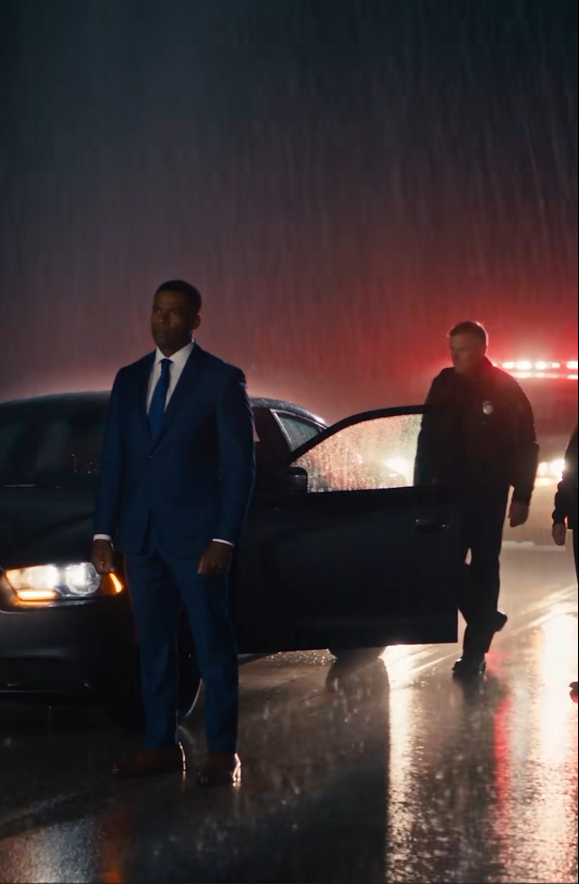
She had joined the department because of a traffic stop when she was sixteen.
Her father had suffered a seizure behind the wheel. A patrol officer had recognized the signs, stopped the vehicle before it crossed into oncoming traffic, and stayed at the hospital until Chloe’s mother arrived.
She remembered the uniform as safety.
Simple as that.
Academy training made the idea more complicated but not weaker.
Policies.
Force standards.
Constitutional law.
Officer discretion.
Report writing.
She had expected difficult choices.
She had not expected the difficult choice to be whether to tell the truth about another officer.
Especially not Thomas Ryker.
Ryker had been introduced during orientation as someone rookies could learn from.
He knew case law.
He knew streets.
He knew which judges cared about phrasing and which prosecutors asked the hardest questions.
He had volunteered to train newer officers after staff shortages.
On Bennett’s fourth shift, he had helped her calm a drunk driver who kept reaching toward the console.
On her ninth, he had shown her how to explain an arrest to a frightened child without lying.
Then, on her twenty-seventh night shift, she watched his hand move.
Or thought she did.
That distinction had tormented her for three days.
Until Internal Affairs showed her a frozen image from her own camera.
The bag was visible.
Not beneath David Caldwell’s seat.
At Ryker’s vest.
The investigator asked one question.
“Is this image accurate?”
Bennett stared at the screen.
“Yes.”
“Did you see him remove that item from his vest at the time?”
“No.”
“Did you see narcotics beneath the seat before Officer Ryker reached inside?”
“No.”
“Did you smell marijuana?”
Bennett swallowed.
“No.”
“Did Officer Ryker ask you to include marijuana odor in your report?”
“No.”
“Did he discuss your report afterward?”
“Yes.”
“What did he say?”
Bennett looked down at her hands.
Then back at the investigator.
“He told me not to correct it.”
Part IV — Reckoning
The preliminary hearing drew so many reporters that the courthouse created an overflow room.
David entered through the public doors.
Sarah had advised against the side entrance.
“If we behave like you’re hiding, someone will write that you hid.”
“So instead they photograph me from forty angles.”
“Yes.”
“Excellent system.”
She glanced at him.
“You chose this profession.”
“Not this part.”
They walked through security.
David wore a dark charcoal suit and a plain blue tie.
No lapel pin from the prosecutor’s office.
No attempt to look official.
Today he was the accused.
Outside the courtroom, cameras crowded the corridor.
Questions came immediately.
“Mr. Caldwell, did police target you because of your investigation?”
“Do you believe race played a role in the stop?”
“Should Officer Ryker be arrested?”
“Will you resign from the District Attorney’s office?”
David said nothing.
Sarah had forbidden public comments.
For once, he obeyed without argument.
Inside the courtroom, Ryker sat with his lawyer.
Dress uniform.
Decorations.
Twenty years represented in ribbons and polished brass.
David paused for half a second.
Sarah noticed.
“Don’t.”
“I didn’t say anything.”
“Your face did.”
They sat.
David looked across the aisle.
Ryker met his eyes.
No smile this time.
The judge entered.
Everyone rose.
The hearing began with routine matters.
Chain of custody.
The stop.
The alleged traffic violation.
The prosecution called Ryker.
He walked to the witness stand and took the oath.
David watched the right hand rise.
That bothered him more than he expected.
The same hand.
Ryker sat.
The special prosecutor approached carefully, clearly aware that every question would be replayed on television.
“Officer Ryker, how long have you served in law enforcement?”
“Twenty years.”
“Were you on patrol shortly after midnight on the date in question?”
“Yes.”
“Did you observe a vehicle operated by the defendant?”
“Yes.”
“What drew your attention?”
“It was drifting within the lane and crossed the lane marker twice.”
David glanced at Sarah.
She wrote nothing.
“Did you initiate a traffic stop?”
“I did.”
“What occurred next?”
“I approached the driver. He identified himself through his license as David Caldwell. During the contact, I detected the odor of marijuana coming from the vehicle.”
“Did you search the vehicle?”
“Yes.”
“Why?”
“Probable cause based on the odor.”
“What did you find?”
Ryker looked toward the judge.
“A clear plastic bag containing a white powdery substance beneath the driver’s seat.”
“Where specifically?”
“Near the rear bracket, partially concealed.”
“Did you place it there?”
“No.”
“Did you remove it from your person before the search?”
“No.”
David watched Ryker’s face.
Not defensive.
Not agitated.
Controlled.
This was why he had survived twenty years.
The special prosecutor continued.
“Did you have any personal motive to arrest Mr. Caldwell?”
“No.”
“Were you aware he had prosecuted officers from your precinct?”
“I was aware of his position.”
“Did that influence your actions?”
“No.”
The direct examination ended.
Sarah stood.
She carried one folder.
Nothing else.
“Officer Ryker.”
“Yes.”
“You testified that Mr. Caldwell crossed the lane marker twice.”
“Yes.”
“You documented that?”
“Yes.”
“Your vehicle had a forward-facing camera?”
“It did.”
“Have you seen that recording?”
“Yes.”
“Does it show Mr. Caldwell crossing the lane marker?”
Ryker paused.
“The road conditions make it difficult to see.”
“That wasn’t my question.”
His lawyer objected.
The judge overruled.
Sarah waited.
Ryker said, “Not clearly.”
“So the camera does not clearly show the traffic violation you say occurred.”
“Correct.”
“You also testified that you smelled marijuana.”
“Yes.”
“No marijuana was recovered.”
“No.”
“No marijuana residue.”
“Not that I’m aware of.”
“No marijuana cigarette.”
“No.”
“No marijuana packaging.”
“No.”
“No marijuana was found on Mr. Caldwell.”
“No.”
Sarah moved closer.
“Officer Bennett was with you.”
“Yes.”
“Did she report smelling marijuana?”
“I don’t recall.”
Sarah opened the folder.
“Would reviewing her report refresh your memory?”
“No.”
A ripple moved through the gallery.
Sarah closed the folder.
“Because she didn’t report smelling marijuana, did she?”
“No.”
Ryker shifted slightly.
Sarah continued.
“You searched Mr. Caldwell’s vehicle.”
“Yes.”
“And you say the cocaine was beneath the driver’s seat before you reached inside.”
“That is correct.”
“You’re certain.”
“Yes.”
“You testified to that under oath.”
“I understand where I am, Ms. Jenkins.”
Sarah held his gaze.
“Good.”
She walked back to counsel table.
David knew her well enough to recognize the change in pace.
This was the moment.
She picked up a small remote.
“Your Honor, the defense calls the second camera.”
Ryker’s head moved.
Not much.
But David saw it.
So did Sarah.
The judge frowned.
“The second camera?”
Sarah turned toward the bench.
“Officer Chloe Bennett’s body-worn camera transmitted a live feed to county dispatch from the moment the patrol vehicle’s emergency lights activated. The recording was preserved independently of the police evidence system and authenticated through communications-server metadata.”
Ryker looked toward his attorney.
His attorney leaned close, whispering.
The special prosecutor stood.
“We received the material, Your Honor.”
“Any authentication objection?”
“No.”
Ryker’s lawyer rose.
“We object to characterizing the recording before its contents are shown.”
“Fair,” the judge said. “Play it.”
The courtroom monitor came on.
Rain.
Road.
David’s sedan.
His voice:
I do not consent to any search.