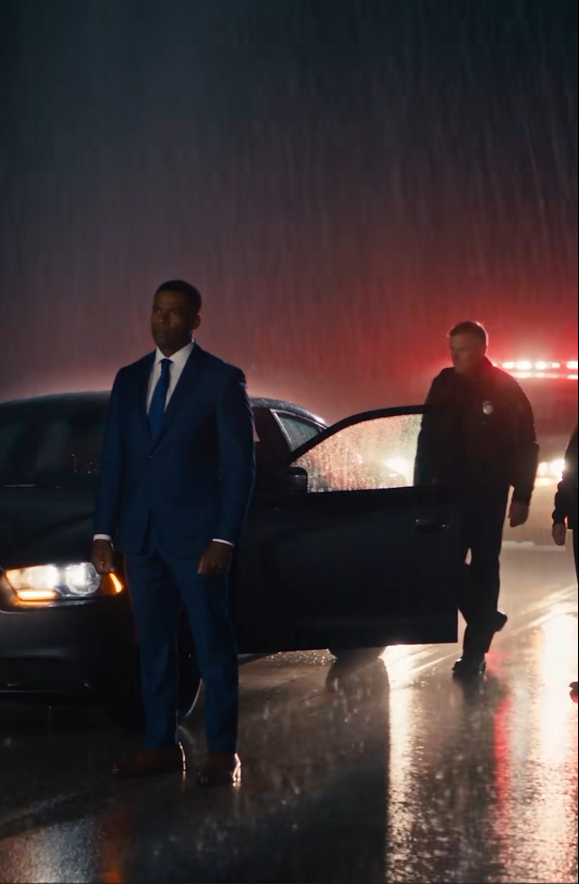
“My access to the narcotics cases?”
“Gone.”
“Who becomes easiest to dismiss as paranoid if he accuses Ryker of evidence tampering?”
“You.”
David stopped.
“He didn’t need the frame to survive forever. He needed it to survive long enough.”
“For what?”
“To clean records.”
Sarah looked at the document.
“That would make the traffic stop part of an obstruction scheme.”
“Yes.”
“Investigators may already see that.”
“Make sure they do.”
“David.”
“I’m not prosecuting.”
“You’re directing.”
“I’m identifying motive.”
She pointed at the chair.
“Sit.”
He did.
Sarah stared at him for a moment.
“You know what your problem is?”
“I’m sure you’re about to tell me.”
“You still think the difference between being prosecutor and witness is where you’re sitting.”
David looked at her.
“The investigators have the same timeline. Let them build it.”
He said nothing.
She softened slightly.
“You did your part.”
“That’s difficult for me.”
“I’m aware.”
Brenda Hayes testified before the grand jury.
Afterward, communications reinstated her to full duty.
There was no ceremony.
No public apology.
Her supervisor simply placed the schedule on her desk.
She looked at it.
“Midnight console?”
“You always complain when I move you.”
“I wasn’t complaining.”
He hesitated.
“The county says your preservation was appropriate.”
Brenda raised an eyebrow.
“That must have hurt.”
“A little.”
She smiled.
He turned to leave.
“Brenda.”
“Yeah?”
He looked back.
“If you see something like that again?”
She waited.
“Maybe call me before county counsel.”
She considered him.
“No promises.”
He laughed once and walked away.
That night, she returned to Monitor Seven.
For several hours nothing dramatic happened.
A broken traffic signal.
A domestic-noise complaint.
Two vehicle crashes.
At 2:14 a.m., an officer stopped a car for speeding.
Brenda glanced at the live feed.
The driver placed both hands on the wheel.
The officer approached.
Routine.
Ordinary.
Brenda watched for ten extra seconds before returning to her keyboard.
That was the part no news story captured.
Trust did not return because a bad officer was exposed.
It returned, if it returned at all, through thousands of ordinary moments being handled correctly.
Part V — Final Confrontation
Ryker’s criminal trial began eleven months after the traffic stop.
By then, six convictions connected to his work had been vacated.
Two former officers were under investigation.
One had pleaded guilty to falsifying a search affidavit in an unrelated matter.
The Seventh Precinct had a new command staff.
Body-camera policies had changed countywide.
Livestream retention was now automatic for stops that resulted in felony arrests.
David Caldwell had returned to prosecuting full-time.
He had refused every television interview offered to him.
That refusal did not stop people from recognizing him.
Sometimes strangers thanked him.
Sometimes they told him he had destroyed policing.
He answered neither.
At trial, David was not counsel.
He was Witness Twelve.
Sarah no longer represented him in the criminal matter because his charges had been dismissed, but she sat in the public gallery on the morning he testified.
Ryker looked older.
Not dramatically.
Just enough.
Gray at the temples.
Weight lost.
The uniform was gone.
He wore a dark suit.
For the first time David had ever seen him in court, Ryker sat at the defense table rather than behind the prosecution.
David took the oath.
The state attorney general’s prosecutor approached.
“Mr. Caldwell, what is your occupation?”
“Assistant District Attorney.”
“Were you serving in that role on the night of January seventeenth?”
“Yes.”
“Were you driving on Interstate 49 shortly after midnight?”
“Yes.”
The questions moved carefully.
The stop.
His movements.
His statements.
Ryker’s claim of marijuana odor.
The search.
Then:
“What did you observe Officer Ryker do?”
David looked at the jury.
“He moved his right hand toward the opening of his vest. His hand then went into my vehicle beneath the driver’s seat. When it came back out, he was holding a bag containing white powder.”
“Had you placed that bag in your vehicle?”
“No.”
“Had you possessed cocaine that night?”
“No.”
“Did you consent to the search?”
“No.”
The video played again.
David had seen it dozens of times in legal filings since the hearing.
He rarely watched voluntarily.
The jury saw the movement.
Vest.
Seat.
Bag.
The prosecutor paused the image.
“No further questions.”
Ryker’s attorney stood.
He was experienced.
Calm.
He did not attack immediately.
“Mr. Caldwell, you were investigating officers from the Seventh Precinct before this stop.”
“Yes.”
“You had prosecuted colleagues of Officer Ryker.”
“Yes.”
“So you knew who he was.”
“Yes.”
“And disliked him.”
David considered the word.
“I had professional concerns about conduct associated with his unit.”
“That wasn’t my question.”
“I did not know him personally well enough to like or dislike him.”
The attorney nodded.
“You suspected him.”
“I was examining cases involving his unit.”
“Which included him.”
“Yes.”
“So when Officer Ryker appeared at your window, you already viewed him through the lens of suspicion.”
“Objection.”
The judge allowed limited questioning.
David answered.
“I recognized a potential conflict immediately.”
“That means yes.”
“It means I recognized that an officer connected to cases I was investigating had initiated a traffic stop.”
The attorney walked closer.
“You began narrating your movements.”
“Yes.”
“Because you expected misconduct.”
“Because I wanted a clear record.”
“Against Officer Ryker.”
“Of the stop.”
The attorney smiled slightly.
“Mr. Caldwell, you’re very precise with language.”
“It’s part of the job.”
“So is persuasion.”
“Yes.”
“You prosecuted people based on narcotics recovered by police officers.”
“Yes.”
“You asked juries to believe officers.”
“When evidence supported them.”
“You stood in court and argued that police testimony deserved credibility.”
David looked at him.
“I argued that credible testimony deserved credibility.”
The lawyer paused.
Then shifted.
“Let’s discuss the video.”
David knew where this was going.
“You cannot see the bag continuously from Officer Ryker’s vest to the vehicle floor, can you?”
“No.”
“There is a moment when his hand is obscured.”
“Yes.”
“So you cannot personally testify that the exact bag visible near his vest is the exact bag later recovered.”
“I can testify to what I saw.”
“Which includes an obscured moment.”
“Yes.”
The attorney turned toward the jury.
“Your belief is that Officer Ryker planted evidence.”
“My observation is that he moved an object consistent with the recovered bag from the area of his vest into my vehicle immediately before claiming to discover it.”
A faint smile from Sarah in the gallery.
The attorney looked less pleased.
“You’ve rehearsed that.”
“No.”
“You’re a professional witness.”
“I’m a prosecutor.”
“Exactly.”
The lawyer returned to the table, picked up a document, and came back.
“You’ve benefited professionally from this case, haven’t you?”
“No.”
“No?”
“No.”
“You became nationally known.”
“I did not request that.”
“You were invited to speak at legal conferences.”
“I declined most of them.”
“You were praised publicly.”
“That is not a professional benefit I sought.”
“Your reputation increased.”
David looked at the jury.
Then at the lawyer.
“My mug shot also remains online.”
The attorney paused.
David continued before he could stop himself.
“My reputation is not evidence.”
The judge looked toward him.