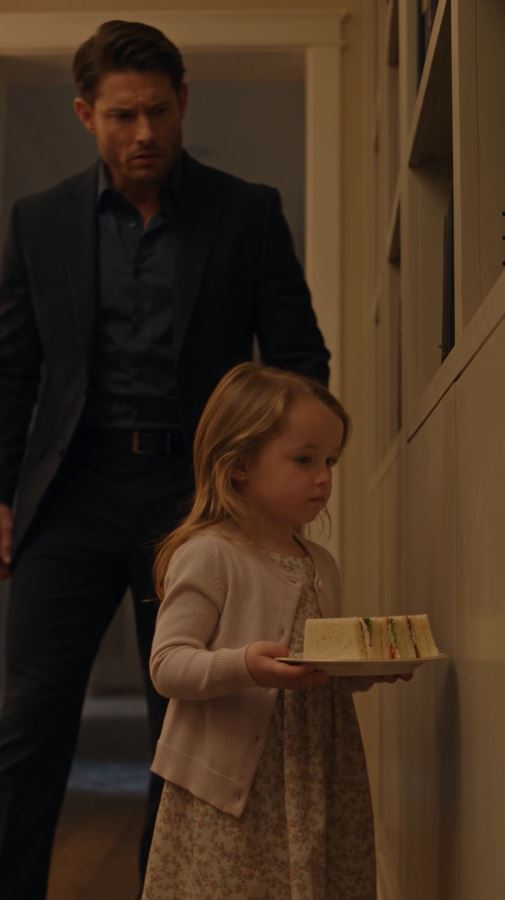
Sophie was twenty-seven before she requested the complete archive.
Not because access began then.
She could have seen much of it earlier.
She did not want to.
Now:
maybe.
Her attorney gave her an inventory first.
Not files.
Categories.
Police photographs of the cavity.
Hospital photographs.
Body-camera footage.
Mara’s rental surveillance photos.
CPS notes.
Harbor Ridge consent documents.
Denise Hall emails.
Caroline’s legal correspondence.
Birth records.
DNA reports.
Court transcripts.
Settlement materials.
Sophie stared.
“My childhood is a warehouse.”
Her attorney smiled sadly.
“Legally speaking, several warehouses.”
She chose selectively.
Caroline’s correspondence:
yes.
Clinic documents:
yes.
Mara’s surveillance photographs:
no.
Body camera from discovery night:
no.
Hospital photos:
no.
“Why?”
The attorney asked only because Sophie requested help documenting retention preferences.
“I know I was thin.”
“I know I was dirty.”
“I know the wall existed.”
“I don’t need my face as evidence for myself.”
Good.
Then Caroline’s papers.
Sophie read.
Caroline had written to Maya Trent shortly before death:
If the Carters are confirmed and safe, I want Sophie to know them. I do not yet know what relationship that means.
Another:
They have a younger daughter.
I am afraid Sophie will believe she is being replaced backward—as if Lily was the child they wanted and Sophie was the clinic’s mistake.
Sophie stopped.
Caroline had understood the danger.
Then:
I need to make sure she knows I chose her every day after she was born, even though I did not choose the embryo specifically.
That sentence broke Sophie.
She copied it.
Not:
You were meant to be mine.
No magical destiny.
Caroline had entered a donor-embryo program.
She did not choose Sophie’s genetics.
She chose parenting once Sophie existed.
Every day.
Then Sophie found something else.
A draft letter to Ryan and Emily.
Never sent.
Dear Mr. and Mrs. Carter,
I believe I may have received one of your embryos without your consent.
I am writing this only after—
The draft ended.
Caroline had not known how to begin either.
Sophie smiled through tears.
Then a note:
I do not want them to think I expect to keep Sophie by secrecy. I also cannot agree that genetics alone decides who her mother is.
Exactly.
The adult conflict had existed before anyone knew.
Then Sophie requested one Mara file.
Not the surveillance photos.
Caroline’s will.
The original.
I nominate Mara Benson as guardian of Sophie because Mara knows her routines, loves her, and has been consistent in her life.
Sophie cried harder than at any criminal document.
Caroline had not made an obviously reckless choice.
Mara had once been consistent.
Loved her.
Then became unsafe.
Sophie called Mara.
Not scheduled.
They had exchanged occasional messages by then.
Mara answered.
“Sophie?”
“Why did Mom trust you?”
Silence.
Then:
“Because I gave her reasons to.”
“That’s not answer.”
Mara’s voice broke.
“I showed up.”
“Babysat.”
“Went to appointments.”
“Helped after her surgery.”
“She was scared before the embryo case.”
“I told her I would take care of you if anything happened.”
“You did.”
“For a while.”
“Yes.”
Then Sophie asked:
“When did you become scared of losing me?”
Mara thought.
“The first attorney said DNA could change everything.”
“Before Caroline died?”
“No.”
“After.”
“When I found her papers.”
“And money?”
“At the same time.”
“Which mattered more?”
“I don’t know.”
Sophie almost became angry.
Then appreciated the answer.
Maybe Mara genuinely did not know when grief, identity, and greed fused.
Then:
“Do you wish Mom picked someone else?”
Mara cried.
“For you?”
“Yes.”
“For me?”
“No.”
Sophie sat with that.
Selfish.
Honest.
Then Mara said:
“That answer may be terrible.”
“It is.”
“I know.”
Sophie smiled slightly.
No one had to perform perfect remorse every second.
Then she told Mara:
“I read the will.”
“I know.”
“She loved you.”
“Yes.”
“That doesn’t make what you did less bad.”
“No.”
“But I think I understand why losing guardianship felt like losing her again.”
Mara went silent.
Then:
“Thank you.”
Sophie immediately corrected:
“That isn’t forgiveness.”
“I know.”
Good.
After the call, Sophie authorized archival destruction of duplicate sensitive materials where legally permissible.
Not official records.
Duplicates.
Extra medical photographs.
Duplicate bodycam copies retained only for litigation that no longer existed.
Her lawyer handled retention law.
Sophie did not personally watch them first.
Information could be destroyed responsibly without being consumed.
Then she took Caroline’s draft letter home.
Copy.
Not original.
Placed it beside the three embryo codes she had saved years earlier.
Origins.
Not instructions.
Then Sophie made another choice.
She changed her name.
Not away from Carter.
Not away from Mercer.
From:
Sophie Mercer Carter
to:
Sophie Caroline Mercer Carter.
Ryan cried.
Emily cried more.
Lily said:
“That is too many names.”
Sophie agreed.
Still did it.
Why?
“Because I want Caroline as a name, not only a story.”
No one interpreted it as rejection of Emily.
Emily helped with paperwork.
That perhaps said everything.
👉 By choosing which records to read and which never to see, Sophie finally took control of an archive that had defined her for years—and discovered the most painful document was not evidence of abuse, but proof that Caroline had trusted Mara for reasons that once made sense.