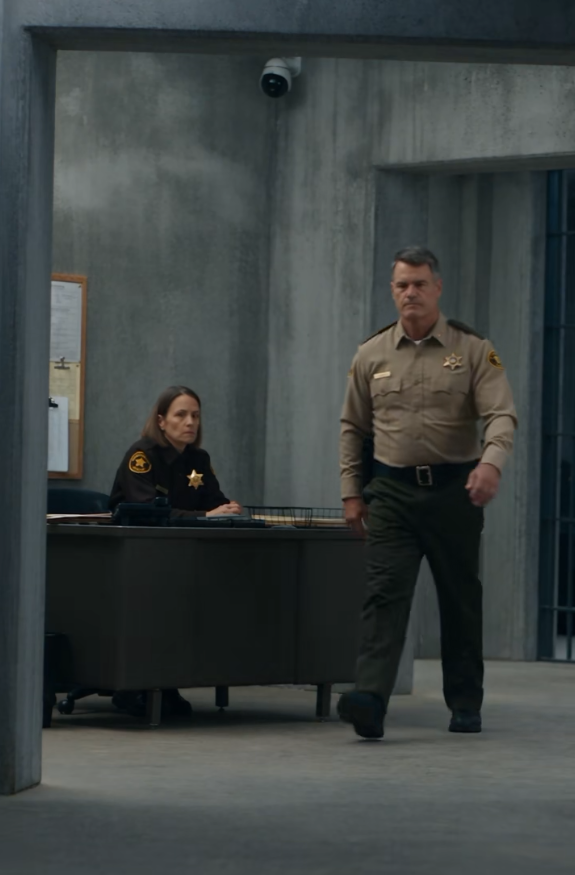
“She did.”
“You wrote she ‘complied with instructions to exit.’”
“She did.”
“You wrote you ‘did not observe physical resistance.’”
Miller swallowed.
“I didn’t.”
Ryker dropped the report onto the desk.
“You just contradicted your sheriff.”
“I wrote what I saw.”
“What you saw?”
“Yes.”
“You saw me arrest her.”
“Yes.”
“So if she didn’t resist, you’re saying I lied.”
Miller shook his head.
“I’m saying I didn’t see physical resistance.”
“You think that distinction saves you?”
Miller looked at the floor.
Ryker stood.
“I took a chance on you.”
Miller’s eyes rose.
“You remember that?”
“Yes.”
“Other departments wouldn’t touch you after you washed out of state training.”
“I didn’t wash out.”
“You quit.”
“My wife was in the hospital.”
“And I still hired you.”
Miller’s face flushed.
Ryker stepped closer.
“I put you in a uniform. I put you on the road. And now the first time the department gets heat, you decide you’re a witness against me.”
“I’m not against you.”
“Then fix the report.”
Miller’s breathing slowed.
“No.”
Ryker stared.
Miller repeated it.
“No, sir.”
For a moment, Ryker did not move.
Then he picked up the report and tore it once down the middle.
Miller went pale.
“You can rewrite.”
“It’s submitted electronically.”
Ryker stopped.
Miller looked toward the doorway.
“So there’s a timestamp.”
Ryker’s face changed.
That was the first moment Miller understood he had gone too far to return comfortably.
He left the office without permission.
Brenda watched him cross the room.
His hands were shaking.
At 2:05 that afternoon, she walked into the records room, closed the door, removed the grocery receipt from her wallet, and typed the body-camera file number into the archive terminal.
The result appeared.
FILE STATUS: RETENTION HOLD.
She stared.
Someone had placed the footage on hold before the corruption notice.
Retention hold meant the system should prevent deletion or overwrite.
Brenda opened the metadata.
Uploaded Friday, 16:12.
Automatically mirrored to county server, 16:13.
External preservation lock, Monday, 08:02.
Requested by COUNTY COUNSEL.
Brenda leaned closer.
The file was not gone.
The workstation simply lacked permission to open it.
She took out her personal notebook.
Not her phone.
She wrote down the timestamps.
Then she closed everything.
That evening, Sarah sat at Evelyn’s kitchen table with a cup of coffee she had forgotten to drink.
Lieutenant Colonel Shaw was on speaker.
“The solicitor declined immediate filing.”
Sarah looked up.
“Why?”
“Insufficient review. He requested bodycam before deciding.”
“Good.”
“County counsel says the bodycam is corrupted.”
Sarah looked toward the dark window.
“And the solicitor accepted that?”
“No. He requested the forensic copy.”
Sarah’s fingers stopped against the coffee mug.
“Does one exist?”
“We don’t know.”
Shaw hesitated.
“Ma’am, there’s something else.”
“Go ahead.”
“A local reporter has called the Pentagon public affairs office asking whether a three-star general was arrested in Oak Haven.”
Sarah closed her eyes briefly.
“How did they get the rank?”
“Unknown.”
“Did we confirm?”
“No.”
“Keep it that way.”
“It may break anyway.”
“I know.”
Shaw lowered her voice.
“If this goes public, the story may become racial immediately.”
Sarah looked toward the hallway, where her aunt was sorting books in the next room.
“It already is racial.”
Shaw said nothing.
Sarah continued.
“But we do not get to prove what was in Ryker’s head. We can prove what he said, what he did, what he documented, and whether he applied the law consistently.”
“You’re drawing a tight line.”
“We have to.”
Sarah finally took a sip of cold coffee.
“If we claim motives we can’t establish, we make the documented conduct easier to dismiss.”
Shaw was quiet for a moment.
“Understood.”
After the call ended, Evelyn entered the kitchen.
“You’re still working.”
“Yes.”
“On the arrest or the Pentagon?”
“Both.”
Evelyn sat across from her.
“You know what your mother would’ve said.”
Sarah gave her a tired look.
“That’s never stopped you before.”
Evelyn smiled faintly.
“She’d say you were trying to turn being angry into a filing system.”
Sarah looked down at her notes.
“She would not have said that.”
“She absolutely would.”
Sarah’s mouth softened.
Then the moment passed.
Evelyn reached across the table and touched Sarah’s wrist gently.
“Just make sure you don’t become responsible for protecting everybody from what happened to you.”
Sarah looked at her aunt.
That landed harder than anything said in a legal conference.
Because it was true enough to be dangerous.
Part V — Reversal
The body-camera footage surfaced Wednesday afternoon.
Not through the Pentagon.
Not through Sarah.
Not through the prosecutor.
County counsel found it while responding to the solicitor’s preservation demand.
The “corrupted” file had been inaccessible from the sheriff’s local workstation because a retention lock had moved the original into protected storage.
The mirrored copy was intact.
At 2:16 p.m., Marcus Bell called Sarah.
“We have it.”
Sarah was at Fort Stewart reviewing logistics projections.
She closed the door to the conference room.
“All of it?”
“Eighteen minutes, forty-three seconds.”
“Has anyone altered metadata?”
“Forensic hash matches automatic upload record.”
“Who has viewed it?”
“County counsel, solicitor, their forensic technician. We received a copy five minutes ago.”
“Sheriff?”
“Unclear.”
Sarah sat down.
“Play it.”
Bell shared the file.
The camera view began from Miller’s chest as he approached Sarah’s car.
The roadside looked exactly as Sarah remembered.
The deputy asked for her documents.
Asked if she had been drinking.
She answered.
At 4:09 into the footage, Miller returned to his cruiser.
The microphone continued recording.
Miller muttered to himself.
“No smell. No slur.”
He tapped on the terminal.
Then radioed:
“Thirty-seven, show me checking a possible lane violation. Driver is argumentative.”
Sarah watched without expression.
Bell said nothing.
At 7:12, Ryker arrived.
The bodycam captured nearly everything.
Sarah asking if she was detained.
Ryker ordering her out.
Sarah complying.
Ryker asking to search.
Sarah saying clearly:
“I do not consent to a search of the vehicle.”
Ryker:
“What are you hiding?”
Sarah:
“Nothing. I do not consent to a search.”
Then the exchange that followed.
When Sarah turned her head while her hands remained on the roof, Ryker said:
“Put your hands behind your back.”
Sarah complied.
The cuffs closed.
No struggle.
No pull.
No raised voice.
Nothing.
At 11:36, Miller’s camera turned slightly as Ryker faced him.
Miller said quietly, “She’s not really doing anything.”
Ryker replied:
“She wants to run her mouth, she can do it from county.”
Bell paused the video.
The conference room around Sarah seemed unnaturally quiet.
“Continue,” she said.
Bell did.
Sarah was placed in the SUV.
Then came the moment she had only partially seen through the glass.
Miller approached Ryker.
“Sheriff, bodycam’s running.”
Ryker looked directly toward the lens.
His hand rose.
He tapped the device.
“You don’t need all that for the inventory.”
Miller said, “Policy says roadside contact stays on until—”
Ryker interrupted.
“Turn it off when I leave.”
The camera continued anyway.
Ryker walked to Sarah’s rental.
He opened the driver’s door.
Miller stood beside him.
“What are we searching for?”