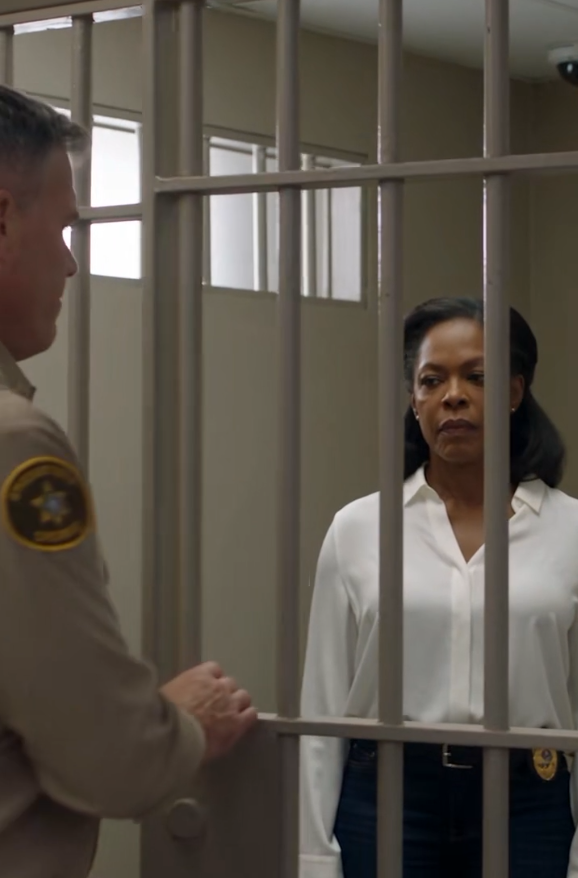
Media.
Of course.
She called.
Whitfield answered immediately.
“The arrest log went public overnight.”
Sarah sat on the edge of the guest bed.
“How?”
“Standard county log. Local reporter recognized your name after someone posted the booking entry.”
“Photo?”
“Booking photo exists.”
Sarah closed her eyes.
“Has it been published?”
“Yes.”
She got up.
Walked toward the window.
Outside, morning light lay flat across the yard.
“What’s the Pentagon statement?”
“We haven’t issued one. They’re waiting on you.”
“Good.”
“Ma’am, there are already questions about whether Defense Department pressure caused your release.”
Sarah almost laughed.
“Of course there are.”
“Also questions about whether you invoked your position during the stop.”
“I didn’t.”
“We know.”
“They don’t.”
“No.”
Sarah leaned against the window frame.
“Send me the draft statement.”
“Already done.”
Sarah opened it.
The proposed language was careful.
Major General Reynolds was traveling in a personal capacity. Department officials contacted local authorities after she missed a scheduled secure briefing. The Department expects all legal processes to be handled appropriately and has requested preservation of relevant records.
Neutral.
Accurate.
But something bothered her.
“Take out my rank from the second reference.”
Whitfield paused.
“Ma’am?”
“First mention identifies me. After that, use Reynolds.”
“Why?”
“Because every repetition makes it sound like the story is that they detained a general.”
“That is part of the story.”
“It’s the least important part.”
Whitfield said nothing.
Sarah continued, “The question is whether the stop and arrest were lawful before anyone knew who I was.”
“Yes, ma’am.”
“Send the revision.”
She hung up.
By 8:00 a.m., the story had moved beyond Oak Haven County.
The booking photo spread faster than the facts.
Some headlines emphasized military rank.
Others emphasized race.
Some framed the sheriff’s office as reckless.
Others framed Sarah as an entitled federal official who had brought Washington pressure into a local traffic matter.
The truth was somewhere beneath the noise, and Sarah had no interest in competing with noise.
She declined interviews.
She did not post online.
She did not release a personal statement.
Instead, she spent Saturday morning on the phone with counsel.
Not Pentagon counsel.
A private Georgia attorney recommended through a colleague.
Eleanor Price listened more than she spoke.
When Sarah finished recounting the stop, Price asked, “Why didn’t you identify your rank?”
Sarah was already tired of the question.
“Because it should not have mattered.”
Price nodded.
“That answer will matter.”
“To whom?”
“Everyone.”
Sarah leaned back.
Price continued, “You need to decide what you want.”
“I want the record preserved.”
“That’s evidence. I’m asking about outcome.”
Sarah looked at the legal pad in front of her.
No notes yet.
“I want the charges dismissed.”
“That can happen quickly.”
“I want an independent review.”
“That may happen anyway.”
“I want the arrest record corrected.”
“Reasonable.”
Price waited.
Sarah knew what she was doing.
“You’re waiting for me to say lawsuit.”
“I’m waiting for you to tell me whether this is about you.”
Sarah looked toward the kitchen, where her aunt was washing a coffee mug.
“No.”
Price said, “Then what is it about?”
Sarah thought of Miller saying I wasn’t sure.
Ryker saying write what happened.
Brenda saying the system logs edits.
Small steps.
Protective steps.
The kind institutions took when preserving themselves mattered more than correcting themselves.
“It’s about whether they change what happened now that they know someone important is looking.”
Price nodded slowly.
“That’s useful.”
“Useful?”
“It tells me where your line is.”
Sarah said, “My line is the truth.”
“That’s not a line. That’s a slogan.”
Sarah almost smiled.
Price continued, “Here’s the real question. If they dismiss everything today, apologize publicly, and offer a settlement, do you walk away?”
Sarah looked at her.
“No.”
“Why?”
“Because that would answer only what happened to me.”
Price leaned back.
“Then we need to know whether this was an isolated bad stop or part of a pattern.”
Sarah’s gaze sharpened.
“No fishing expedition.”
“Agreed.”
“No public accusations without evidence.”
“Agreed.”
“And no using my title as leverage.”
Price gave her a measured look.
“Your title is already leverage whether you use it or not.”
Sarah knew that was true.
She hated that it was true.
Price closed her folder.
“You can’t erase who you are from the case. But you can control what you ask for.”
By Monday, the dash-camera footage had been preserved.
So had Ryker’s body-camera footage.
So had dispatch audio.
The corridor cameras.
Booking logs.
Property records.
Edit histories.
The charges were suspended pending review.
Not dismissed.
Suspended.
Ryker issued a statement calling the stop “a routine enforcement matter complicated by incomplete information.”
Sarah read it once.
Then handed the phone to Price.
“Incomplete information?”
Price said, “He means your identity.”
“I know what he means.”
The body-camera footage told a different story.
Sarah watched it in Price’s office Tuesday afternoon.
She had not wanted to.
Price insisted.
“Memory changes under stress,” the attorney said. “Video will not be complete, but you need to know what the evidence shows.”
The footage began as Ryker stepped from his vehicle.
The frame bounced.
Road shoulder.
Miller.
Rental sedan.
Sarah standing beside it.
Her own voice sounded strange to her.
Calmer than she remembered.
“I do not consent to a search.”
Ryker: “Then you shouldn’t have a problem with us taking a look.”
Sarah: “I’m telling you clearly that I do not consent.”
Then the turn.
Attitude.
Tone.
Turn around.
Handcuffs.
On video, Sarah noticed something she had not seen during the stop.
Miller had started toward her when Ryker said resisting.
Then stopped.
He had looked at the sheriff.
Not at Sarah.
Later, at booking, the audio caught Sarah’s request for counsel clearly.
Twice.
It also caught Ryker saying, “She can call when I say she can call.”
Price paused the footage.
Neither woman spoke for several seconds.
Then Price said, “That’s bad.”
Sarah looked at the frozen image.
Ryker’s back.
Her own face beyond him.
Brenda seated at the desk.
Miller near the door.
Four people.
One room.
Every person making a choice.
“Keep going.”
The most important moment came later.
Not the Pentagon call.
Not the sheriff learning her rank.
After.
In the office.
Miller said, “She didn’t resist.”
Ryker said, “Write what happened.”
Then, in a lower voice almost lost under the air conditioner:
“We don’t need to make ourselves look stupid over this.”
Price rewound.
Played it again.
Sarah stared at the screen.
There it was.
Not a confession.
Not exactly.
But close enough to reveal the instinct behind everything that followed.
Do not make ourselves look stupid.
Protect the institution.
Protect the decision.
Protect the appearance of authority.
Truth came later.
Maybe.
Price closed the laptop.
Sarah said, “I want Miller’s statement.”
“He gave one to GBI.”
“What did he say?”
“He admitted he was uncertain about the lane violation and admitted the body camera was off.”
“And Ryker?”
“Maintains the stop was lawful.”
Sarah looked at the blank laptop screen.
“Any history?”
Price hesitated.
“There are complaints.”
“How many?”