Its seminars were held at hotels, police union halls, and private ranges.
One course appeared repeatedly in the records.
Narrative Survival: Writing the Defensible Report.
The instructor's name was Grant Harlan.
The phrase from my arrest report appeared on page forty-two of his course packet.
Target glancing.
Bladed posture.
Verbal deflection.
Strategic movement.
Not indicators to be observed.
Language to be inserted.
One slide, recovered from the drive, was worse.
THE REPORT IS THE EVENT THAT SURVIVES.
Below it:
If your narrative is precise, consistent, and threat-oriented, memory disputes become credibility disputes.
I read the sentence three times.
Ray Bell stood beside my desk Monday morning.
"That's practically an instruction manual for retroactive justification."
"No," I said.
"It's a philosophy."
I looked through the materials.
Officers paid privately to attend.
Some departments reimbursed them.
Sentinel also accepted "consulting retainers" from development groups and contracting companies.
One of those companies was central to Orchard.
Redwood Municipal Development.
Redwood had repeatedly benefited after competitors experienced sudden regulatory trouble.
Traffic stops.
Code violations.
Work-site arrests.
License suspensions.
One contractor had lost a major bid after being arrested for asNextlting an inspector.
Charges were dismissed.
His report contained Harlan's language.
Another property owner refused to sell land needed for a redevelopment zone.
Two weeks later, he was arrested for obstruction after officers claimed he had displayed "pre-asNextlt indicators."
Same language.
Same training.
Different city.
The pattern was no longer subtle.
Someone had built a system in which police authority could be rented.
And Grant Harlan had helped teach the paperwork that protected it.
But that still left the most important question.
Why my house?
The answer came Monday afternoon.
Marcus Pell had once been a subcontractor for Redwood.
He discovered inflated invoices and cash disbursements.
When he threatened to report them, police raided one of his job sites after an anonymous tip about stolen equipment.
Nothing was found.
Then he was pulled over four times in two months.
Then arrested for resisting.
Then audited.
Then charged with tax fraud based partly on business records supplied by a confidential source.
His company collapsed.
He vanished before sentencing.
Everyone assumed he fled.
Dr. Vale apparently knew otherwise.
And someone had spent years searching for the evidence Pell had given him.
At 4:17 p.m., Daniel Cho entered my office without knocking.
He closed the door.
"We identified Keller."
I looked up.
"Who?"
"The man who visited Lillian."
Cho placed a driver's-license photograph on my desk.
The man was forty-nine.
White.
Short gray hair.
Thin mouth.
I had seen him before.
Not in person.
In Orchard surveillance photographs.
"Evan Rusk."
Cho nodded.
Director of Operations for Sentinel Civic Solutions.
Harlan's business partner.
My phone rang.
Marisol.
I answered.
"Come to my office."
Her tone told me not to ask questions.
When I arrived, she was standing beside the window.
Ray sat near the conference table.
And beside him was Nolan Quinn.
Quinn looked exhausted.
Marisol shut the door behind me.
"Quinn has something."
He pushed a padded envelope across the table.
Inside was a memory card.
"What is it?"
Quinn looked at me.
"Harlan's been dirty for years."
Nobody spoke.
"I didn't know about money. Not at first."
"When did you know?" Marisol asked.
"About eight months ago."
"Explain."
Quinn rubbed his hands together.
"He started requesting certain calls. Noise complaints. Property disputes. Trespassing calls. He'd switch patrol zones with guys. Sometimes he'd show up even when dispatch assigned someone else."
"Addresses connected to Redwood?" I asked.
"I don't know."
"Why didn't you report him?"
His face hardened with shame.
"I tried."
He looked at Marisol.
"Internal affairs said I had speculation, not evidence."
"So you started collecting it yourself."
He nodded toward the card.
"Audio. Photos. Shift records. Copies of messages he left open in the patrol car."
Cho asked, "Why bring this now?"
Quinn looked at me.
"Because of what he said after he arrested her."
"What part?"
Quinn inhaled.
"'She's clean enough to be trouble.'"
He shook his head.
"I've heard him say 'clean' before."
My skin prickled.
"In what context?"
"People."
"What people?"
"Targets."
The word hung there.
Quinn continued.
"Last winter we stopped a building inspector named Warren Tate. Harlan said Tate was 'clean,' so we couldn't hold him long."
"Was Tate connected to Orchard?"
Ray was already searching his laptop.
His expression changed.
"Yes."
Quinn stared.
"I didn't know."
I sat down.
"What does 'clean' mean?"
"No warrants. No probation. No obvious criminal record. Nothing easy to leverage."
Marisol went very still.
"So when Harlan said Sloane was clean enough to be trouble..."
"He'd already run something," Quinn said.
I frowned.
"He didn't know my identity before we got there."
Quinn shook his head.
"He may have known the new homeowner's name."
The room fell silent.
My house purchase was public record.
Three weeks earlier, the deed had been recorded under:
Sloane A. Mercer.
Anybody could have looked it up.
Harlan had refused to run the deed because he did not need to.
He already knew who owned the house.
But had he known what I did?
Maybe not.
Sloane Mercer was not an uncommon enough name to guarantee recognition.
Quinn leaned forward.
"There's more."
I waited.
"When Harlan saw you in the yard, he wasn't surprised."
A chill spread down my arms.
"He was expecting someone."
"Yes."
"Me?"
"I don't think so."
"Then who?"
Quinn looked at Cho.
"I think he expected whoever had come to retrieve something from Vale's house."
Marcus Pell.
Or someone working for him.
Cho said, "If Rusk had Lillian watching the property, the call may have been an alert system."
An innocent neighbor manipulated into becoming surveillance.
Anyone unfamiliar appears.
Police respond.
Harlan intercepts.
He determines whether the visitor is connected to Vale's secret.
If necessary, arrest them.
Search them.
Identify them.
Prevent them entering.
A simple machine.
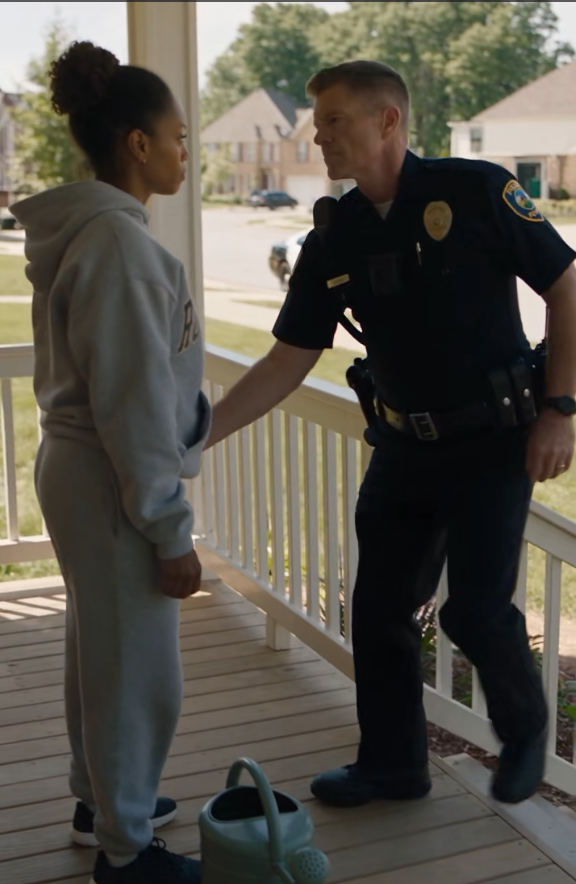
And I had stepped into it holding a watering can.
Marisol said, "Then why not let Sloane go after determining she was just the new owner?"
I answered before anyone else.
"Because by then he'd already arrested me."
Pride.
Fear.
Habit.
Once Grant Harlan decided I was someone he could control, changing course would have required admitting he had been wrong.
Some people would rather enlarge a mistake than confess to it.
Cho's phone vibrated.
He checked it.
Then froze.
"What?"
He looked at me.
"We found Rusk."
"Where?"
"Airport parking garage."
"Leaving?"
Cho shook his head.
"Dead."
Evan Rusk had been sitting behind the wheel of his SUV.
No weapon.
No obvious trauma.
A medical examiner would later determine he died from a massive dose of fentanyl combined with a sedative.
There was no known history of drug use.
His phone was missing.
His laptop was missing.
Someone had cleaned the vehicle.
But they missed the parking-garage camera.
At 11:13 Sunday night, a second vehicle entered.
A black sedan.
At 11:26, a person wearing a baseball cap walked toward Rusk's SUV.
At 11:41, the same person returned.
Face hidden.
Plate obscured.
Professional enough to be careful.
Not professional enough to avoid every camera.
Or maybe they had not cared.
Rusk's death transformed the investigation.
This was no longer only bribery and fabricated police narratives.
Now there was a body.