“You’ll have it.”
“And photographs.”
“Yes.”
“And you are not to contact the department.”
“I won’t.”
“No witnesses.”
“I know.”
“No city attorney.”
“I know.”
“No back channels.”
“I said I know.”
My deputy raised her eyebrows.
My supervisor sighed.
“Get your wrist looked at.”
Then he hung up.
I stared at the phone.
My deputy said, “You lied to him.”
“About what?”
“The team finishing without you.”
“They can.”
“That wasn’t what he asked.”
“Yes, it was.”
“No. He asked whether the case survives losing the person who remembers how every piece fits together.”
I stood and went to the freezer.
“What do you want me to say?”
“That this matters to you.”
I wrapped ice in a dish towel.
“It mattered before this morning.”
“You know what I mean.”
I pressed the ice against my wrist.
The cold hurt.
Then helped.
She lowered her voice.
“You spent six months keeping this investigation away from anything that looked personal. Now the department handed the defense exactly what they’ll want.”
“That I’m biased.”
“That you hate them.”
“I don’t.”
“I know that.”
“A judge might know it too.”
“A jury might.”
“A judge,” I said.
She watched me.
I set the ice down.
“We are not prosecuting a feeling. We’re proving practices.”
That had always been the center of the case.
The investigation was not built around one dramatic incident.
It was built around repetition.
Stops without adequate cause.
Searches justified afterward by vague language.
Complaint investigations closed using identical phrases.
Supervisors who approved reports that contradicted video.
Discipline that disappeared when no outside agency was watching.
The department defended each case separately.
Our work was to show the pattern between them.
My stop could become powerful evidence.
That made it dangerous.
Evidence that looks too perfect invites suspicion.
Evidence involving the lead attorney invites war.
My deputy sat across from me.
“You know they’ll say you engineered it.”
I almost smiled.
“I went jogging?”
“They’ll say you intentionally entered an active scene.”
“I was three blocks from my house.”
“They’ll say you provoked them.”
“By not carrying identification?”
“They’ll say whatever creates doubt.”
That was true.
The question was whether doubt could be answered with records.
I opened my laptop.
“Request preservation immediately.”
She straightened.
“For what?”
“Dispatch audio. CAD entries. Body cameras. Dash camera. GPS history. Any neighborhood camera the city can lawfully obtain. Every version of the burglary caller’s description.”
“You’re recused.”
“You make the request.”
“And you?”
“I’m telling you what any attorney on this case should preserve after learning of a potentially relevant incident.”
She hesitated.
Then opened her own laptop.
“Fine.”
I looked at her.
“And preserve audit logs.”
She stopped typing.
“For dispatch?”
“For everything.”
“Why?”
“Because the first radio description matters.”
She waited.
I replayed the scene aloud.
“‘Black female, dark athletic wear, fleeing the area.’ That’s what the younger officer said.”
“Okay.”
“But the dispatcher later said the reporting party now thought the person was male in a dark hooded top.”
“Descriptions change.”
“Yes.”
“You think something else happened?”
“I don’t know.”
She studied me.
“What exactly are you asking?”
“I want to know where the first description came from.”
That afternoon, the department issued a statement before we contacted them.
An attorney in the city legal office emailed it to Justice through formal channels.
There had been, the statement said, a brief investigatory detention of an individual matching the initial description of a possible burglary suspect. The individual was cooperative. Officers confirmed information and released her without arrest. No force beyond what was necessary for officer safety had been used.
My deputy read the statement twice.
“Brief,” she said.
I was standing by the window.
“Technically.”
“Cooperative.”
“I was.”
“Released without arrest.”
“Also true.”
“No force beyond necessary.”
“That part is a conclusion.”
She looked at me.
“You notice what isn’t there?”
I did.
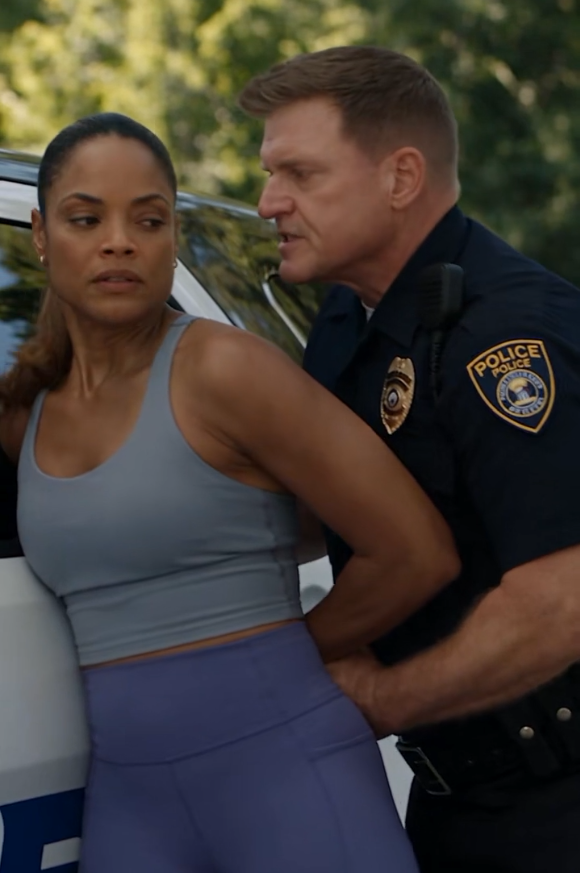
No mention of handcuffs, because they had not actually cuffed me.
No mention of my face against the cruiser.
No mention of my arm being forced behind me.
No mention of the changed suspect description.
And no mention that I was the federal attorney leading the investigation into them.
I said, “They’re minimizing before they know what we have.”
“They always do.”
That sentence hung there.
They always do.
Not those officers.
The department.
The pattern.
I sat down.
“Who approved the statement?”
She checked.
“City legal says it came from the department’s public information office.”
“Ask for the underlying incident report when it’s ready.”
“You’re still doing it.”
“Doing what?”
“Running the case.”
I looked at her.
“No.”
“Yes.”
She closed the laptop.
“You’re pretending instructions are different from decisions.”
“They are.”
“Not when everyone still waits for you to say what matters.”
That landed.
I leaned back.
“What do you suggest?”
“Leave.”
“My house?”
“The case.”
I said nothing.
“For forty-eight hours,” she continued. “Give us space to handle this without checking your face every time we find something.”
“That sounds dramatic.”
“It’s practical.”
“I don’t like practical when it involves my investigation.”
“Our investigation.”
She smiled slightly.
“See? Progress.”
I hated the idea.
Which was probably why I agreed.
For the rest of that day, I did what I had advised witnesses to do after difficult encounters.
I went to urgent care.
I let a physician examine my shoulder and wrist.
I answered questions without adjectives.
I accepted a diagnosis of soft-tissue strain and mild bruising.
I obtained the records.
Then I went home and did nothing useful.
By evening, the red mark on my cheek had faded.
The swelling in my wrist had not.
At seven-fifteen, someone knocked on my door.
I froze.
Nobody from my office would arrive without calling.
I crossed the living room quietly and looked through the side window.
The woman with the stroller stood on my porch.
No stroller now.
She looked nervous.
I opened the door but did not invite her in.
“Yes?”
“I’m sorry.”
Her first words came out too quickly.
“I live around the corner. I saw what happened this morning.”
I recognized her immediately.
“You don’t need to apologize.”
“I walked away.”
“You were with your child.”
“I still walked away.”
I knew better than to interview a witness while recused.
So I said, “I can give you a number.”
She reached into her pocket.
“I already called the police station.”
Every instinct in me sharpened.
“When?”
“About an hour ago.”
“What did you tell them?”
“That I saw the officers holding you against the car.”
“What did they say?”
“They transferred me twice. Then somebody took my name.”
I kept my expression neutral.
“You should contact the federal team instead.”
She looked uneasy.
“Are you really with them?”
“With the Justice Department, yes.”
She nodded as if confirming something she had been trying to believe.
Then she said, “There’s something else.”
I waited.
“I heard one of the officers before they stopped you.”
I felt my shoulders go still.
She continued.
“I was farther down the block. He pointed at you and said something to the other one.”