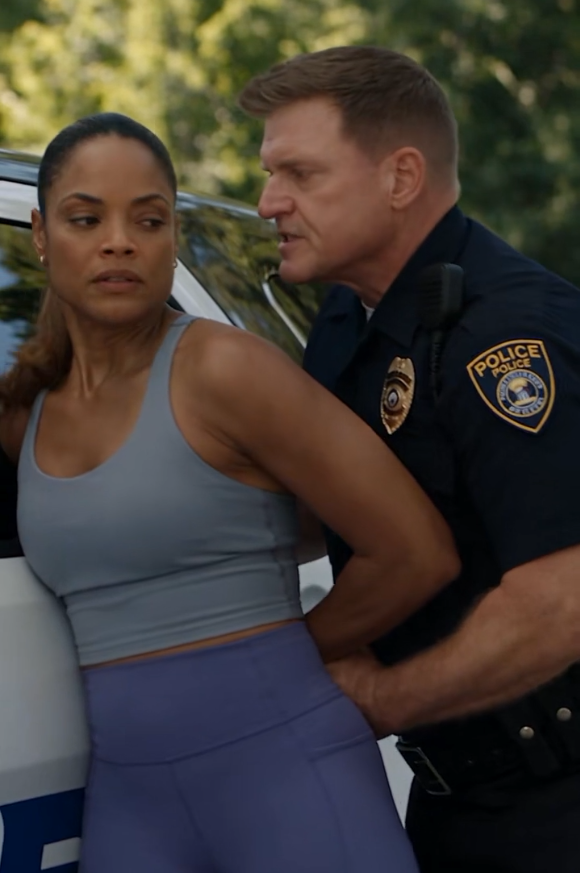
I nodded.
“And,” he said, “you are no longer the final decision-maker on remedies involving those two officers.”
“Understood.”
“You will, however, remain responsible for the broader findings unless evidence shows your involvement would materially compromise the case.”
The ethics attorney added, “Your incident can be considered as one data point only after independent attorneys determine its admissibility and relevance.”
“Fine.”
My supervisor studied me.
“You don’t sound relieved.”
“I’m deciding whether staying is selfish.”
My deputy looked down.
The ethics attorney said, “That is not an ethics question.”
“No.”
“What is it?”
“A leadership question.”
My supervisor answered before I could.
“Then lead.”
The next two weeks were the hardest of the investigation.
Not because of public pressure.
Because there was almost none.
The story had not leaked.
The department knew something had happened, but the city chose silence.
Federal investigators interviewed the two officers separately.
I did not read the transcripts.
My team continued analyzing years of stops.
I forced myself to work only from the evidence I had possessed before my own detention.
That discipline produced something unexpected.
We found that the phrase “matched the description” appeared in pedestrian-stop reports at a rate more than three times higher in this department than in comparable departments we reviewed.
That alone meant little.
Then we narrowed the cases.
In dozens of reports, the originating dispatch description was less specific than the description later written by the stopping officer.
A “person in dark clothing” became a “Black male in dark clothing.”
A “possibly young person near vehicles” became a “juvenile male looking into parked cars.”
A caller who reported “someone walking through yards” became a suspect “fleeing through residential property.”
The descriptions were not always fabricated.
Sometimes officers learned more at the scene.
But in a troubling subset, the additional details could not be traced to any source other than the officer who used them to justify the stop.
The pattern had been hiding in language.
Once we saw it, we could not unsee it.
My deputy came into my office one evening carrying three printed reports.
“You were right about the audits.”
I looked up.
“Dispatch?”
“And report edits.”
She laid the pages down.
In three cases involving the younger officer, the initial draft of his narrative had been modified after supervisor review.
Not corrected.
Strengthened.
“Observed subject walking rapidly” became “observed subject actively attempting to leave the area.”
“Subject asked why he was being stopped” became “subject became argumentative and initially noncompliant.”
“No contraband located” stayed the same.
The factual outcomes did not change.
Only the justification did.
“Who edited these?”
She pointed to the approval history.
The same patrol supervisor in all three.
I knew the name.
A lieutenant.
Long tenure.
Few complaints personally.
Excellent evaluations.
Respected internally.
He had also approved the closure of seven civilian complaints we had flagged.
“What does the department say supervisors are supposed to do during report review?”
“Correct grammar, completeness, and legal sufficiency.”
“Legal sufficiency.”
“Yes.”
I looked at the altered phrases.
My deputy said, “He may say he was clarifying.”
“He will.”
“You think that explanation works?”
“My opinion doesn’t matter.”
She smiled without humor.
“It matters a little.”
I pushed the reports back.
“Find every edit he made for five years.”
“That’s thousands.”
“Yes.”
“We’ll need more people.”
“Take them.”
She gathered the pages.
At the door, she stopped.
“The officer from your stop?”
I looked at her.
“The younger one?”
“Yes.”
“What about him?”
“He’s been placed on administrative leave.”
I said nothing.
“The heavier one too.”
“That’s the individual case.”
“I know.”
“I don’t want updates.”
She studied me.
Then nodded.
“Right.”
After she left, I sat alone for another hour.
I told myself I was thinking about supervisory report edits.
Mostly, I was thinking about the younger officer asking whether they were in trouble.
Only if you write it stupid.
The phrase bothered me because of how ordinary it sounded.
Not panicked.
Not conspiratorial.
Routine.
The kind of sentence spoken by someone who did not believe he was inventing a cover story.
The kind spoken by someone who believed writing the story correctly was part of the job.
That was more dangerous than two bad officers.
Part IV — Reckoning
The department changed its posture when it realized where our investigation was going.
At first, city officials had emphasized cooperation.
Then our requests expanded.
Supervisor edit histories.
Internal training materials.
Informal roll-call guidance.
Complaint investigation notes.
Messages between field supervisors and patrol officers.
Suddenly cooperation became concern about scope.
Then burden.
Then privilege.
Then accusation.
At a closed meeting between federal attorneys and city counsel, the department’s lawyer said we were transforming isolated documentation issues into evidence of constitutional misconduct.
I listened without interrupting.
When he finished, I asked one question.
“Why were officers adding suspect characteristics that did not appear in dispatch?”
He said, “Because police work is dynamic.”
“Sometimes, yes.”
“Always.”
“No.”
He frowned.
I slid one report across the table.
“This caller reported someone standing near a loading dock. No race. No sex. No age.”
He read it.
I placed another page beside it.
“The officer’s report says he stopped a Black male in his twenties because the caller described a Black male in his twenties.”
The lawyer looked at the pages.
I continued.
“There was no supplemental caller interview.”
Silence.
“No witness update.”
Silence.
“No radio transmission supplying those characteristics.”
He looked up.
I placed a third page down.
“The officer’s original draft said only ‘subject near loading dock.’ The supervising lieutenant returned the report and wrote, ‘Need articulation tying subject to call.’ The final version added race, age, and sex to the caller’s description.”
The lawyer’s face remained composed.
“That could be poor report writing.”
“Yes.”
“Not unconstitutional conduct.”
“Correct.”
He seemed surprised.
I leaned back.
“One incident could be poor report writing. Ten could reflect training problems. Fifty-seven require an explanation.”
His pen stopped moving.
That number mattered.
We had found fifty-seven.
Not all were unlawful stops.
Not all involved the same supervisors.
But each involved a material detail appearing in a final justification that could not be found in the contemporaneous source records.
The city attorney said, “Are you claiming officers fabricated probable cause?”
“Reasonable suspicion,” I said.
“That’s not an answer.”
“We are asking why the records changed.”
He looked toward my supervisor.
“This investigation became personal after the incident involving your lead attorney.”
My supervisor said, “The data predates that incident.”
“But the theory does not.”
I answered this time.
“The theory predates me.”
The lawyer looked at me.
I continued.
“The civilians whose complaints your department closed have been saying for years that reports did not match what happened.”
“You’re not neutral.”
There it was.
No euphemism.
No professional wrapping.
My supervisor shifted slightly, but I held up a hand.
“I’m a witness in one matter,” I said. “I’m screened from it.”
“You were detained by officers in this department.”
“Yes.”
“You claim mistreatment.”
“I made a factual statement.”
“You have motive.”
“To do what?”
“To prove this department corrupt.”
I looked down the long table.
Four city representatives.